Ending the Intent Gap: Using Voice AI to Solve Cart Abandonment
Written by: Manya Singh
Last updated: Jul 27, 2026
5 mins

For over a decade, the E-Commerce industry has accepted a painful truth: most people who add items to a cart will never click "Purchase." In previous years, we called this the cost of doing business. We sent automated emails, offered generic 10% discounts, and hoped for the best.
But as we move through 2026, the stakes have changed. Enterprise-level cart abandonment isn't just a lost lead; it is a systemic drain on Customer Acquisition Cost (CAC) and a sign of a failing engagement strategy. According to consolidated data, the average global cart abandonment rate has hit 70.22%. For every £1,000,000 in potential revenue, over £700,000 is walking out the door.
The question for 2026 isn't "Why are they leaving?" but rather "Why are we letting them stay gone?"

The Information Gap

Price Shock and Indecision
The industry standard for solving this has historically been the Abandoned Cart Email. You wait three hours, send a templated message, and hope the customer still cares.
In 2026, this is no longer a strategy. By the time that email hits the inbox, the dopamine hit of the purchase has faded. Emails have a dwindling open rate and zero ability to handle objections in real-time.
The current gap between a dropped cart and a recovery email represents a significant loss of momentum. To close this gap, the industry is seeing a fundamental shift away from the traditional "Recovery" mindset and toward a strategy of Active Completion.
The goal is no longer to chase a customer who has already mentally moved on, but to resolve the underlying friction while the purchase intent is still warm.

Predictive Exit Intent Detection

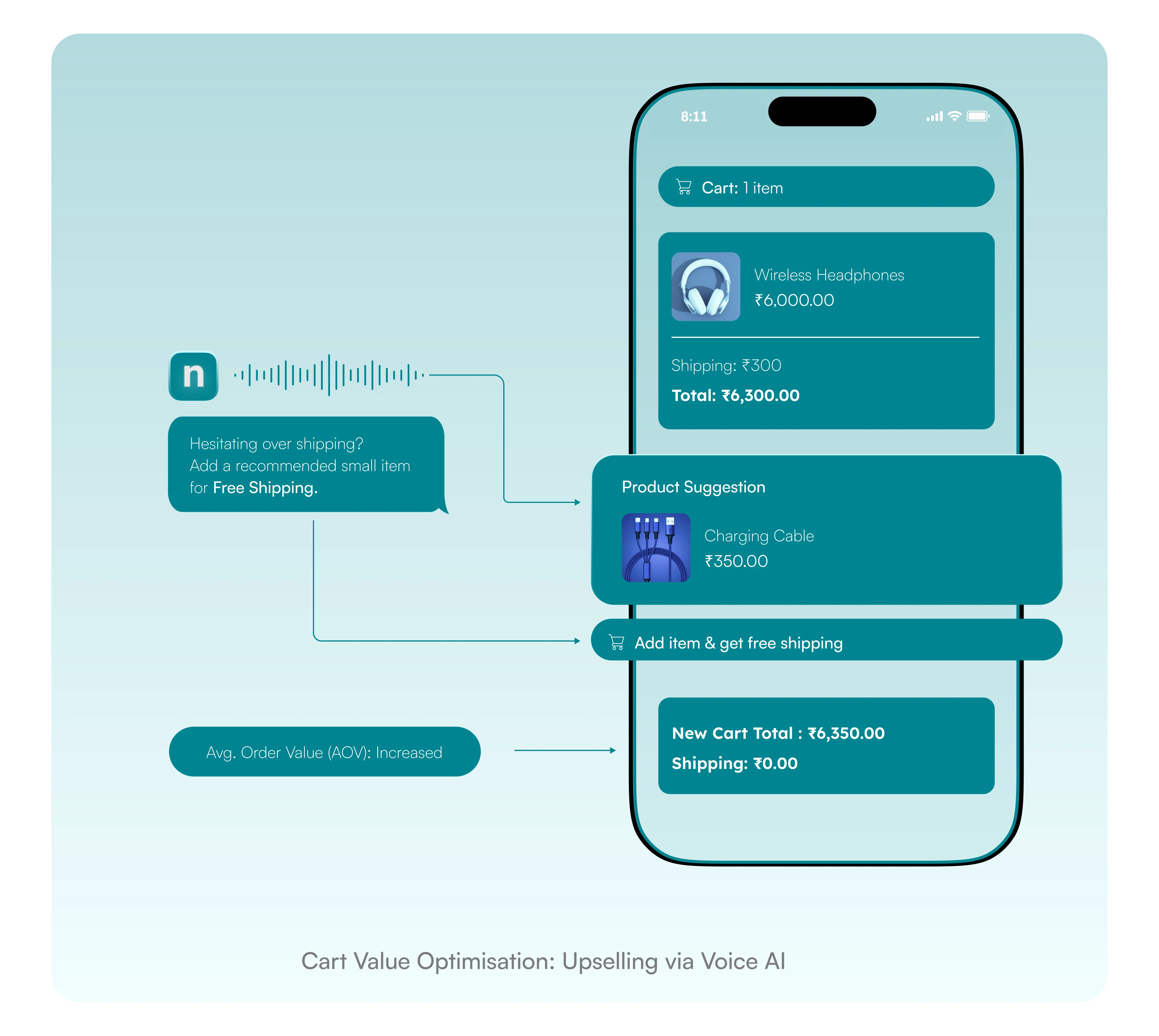
Cart Value Optimisation

Real-Time Objection Handling and Negotiation

Trust Reassurance and Security Support

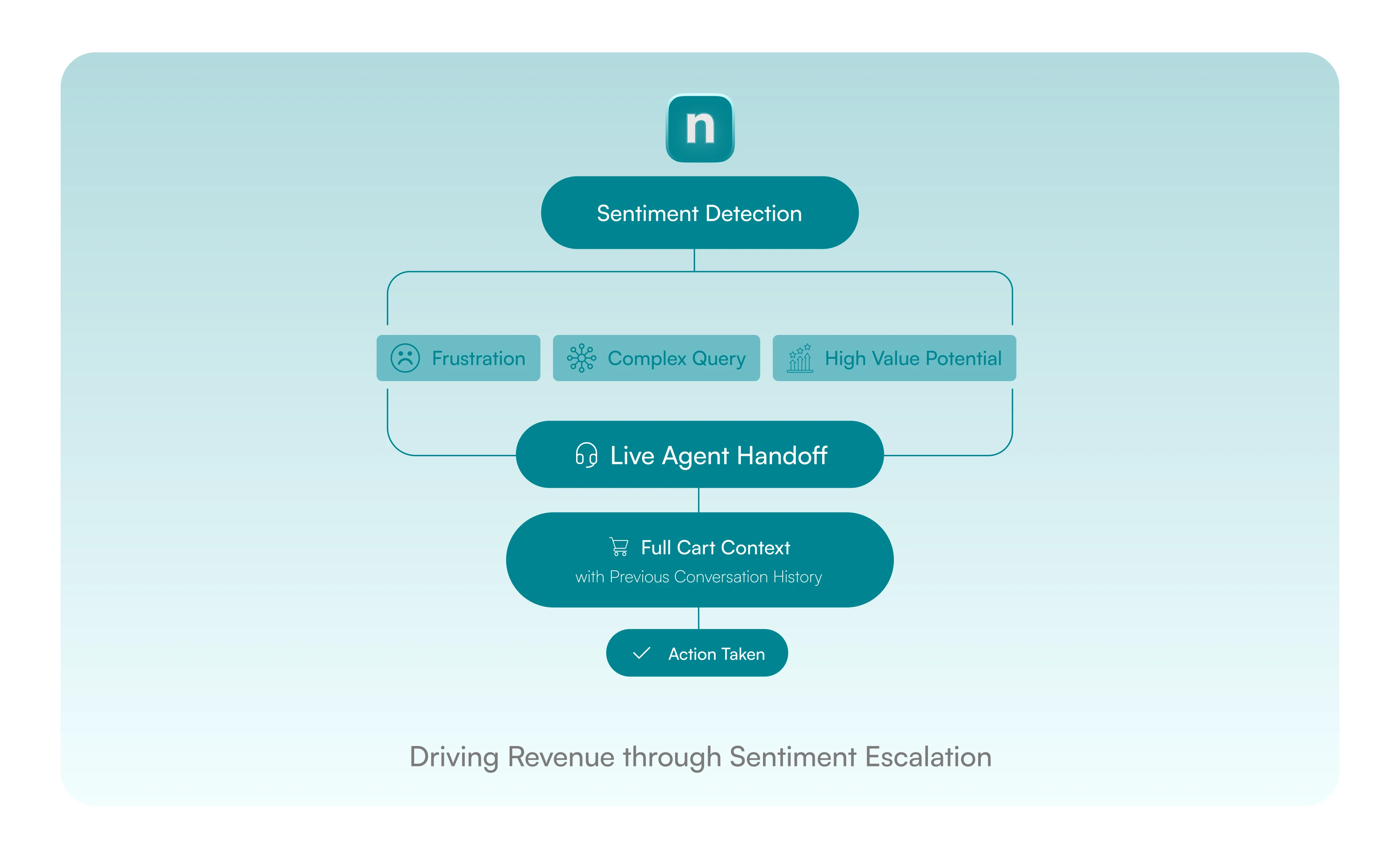
High-Value Escalation via Sentiment Detection
The performance data from the first quarter of 2026 presents a sobering reality for traditional marketing stacks. While legacy email and SMS recovery flows are struggling to maintain connection rates between 5% and 8%, Voice AI Completion is consistently hitting benchmarks between 70% and 85%. These numbers are not just a reflection of better technology, but a shift in how customers respond to different levels of effort from a brand.
The reason for this disparity is rooted in the psychology of the "buying moment." A push notification or an automated email is easy to ignore, swipe away, or bury under a mountain of similar digital noise. They feel like transactional afterthoughts. In contrast, a voice call creates an immediate, high-trust environment that demands a different level of cognitive attention.
By initiating a conversation, the brand moves away from the "re-marketing funnel" and toward a genuine service interaction. This approach treats the shopper as a person with a specific question or a temporary hesitation rather than just another data point in a conversion report. It provides the space for immediate resolution, allowing the customer to voice their concerns and receive an answer while the intent to purchase is still top of mind. In an era of automated spam, the directness of a voice call is exactly the nudge required to turn a stalled session into a completed order.
For enterprises, cart abandonment is an operational leak. In a world where CAC is skyrocketing, you cannot afford to let 70% of your traffic vanish at the one-yard line.
Stop watching the exit. Start fixing the experience. By deploying Voice AI to handle the nuances of price shock and human indecision, you aren't just recovering carts; you are building a frictionless engine for autonomous value.
The cart isn't abandoned. It's just waiting for a resolution.
Is Voice AI intrusive for the customer?
Can the AI handle complex negotiations like discounts?
How difficult is it to integrate with our existing checkout?
TL;DR
Cart abandonment isn't a customer problem, it's an intent problem. Most shoppers don't lose interest, they encounter friction at the point of purchase and leave without getting the answers they need.
Traditional recovery tactics like emails and discount campaigns are often too slow and fail to resolve customer objections in real-time.
Voice AI enables brands to proactively identify hesitation signals, engage customers while purchase intent is still high, and resolve concerns before carts are abandoned.
Real-time conversations can improve conversions through personalized support, dynamic incentives, trust building during checkout, and seamless escalation when human intervention is needed.
The future of cart recovery is active completion, turning stalled customer journeys into completed transactions by solving friction at the moment it occurs.