How Medical AI Chatbots Are Reshaping Healthcare in India And How to Evaluate Them
Written by: Manya Singh
Last updated: Jul 27, 2026
6 mins

India’s healthcare system is handling unprecedented demand: crowded OPDs, rising insurance claims, multilingual patients, and growing expectations for instant digital support. Patients no longer want to wait in queues for basic answers or appointments; they expect the same immediacy from hospitals and insurers that they get from consumer apps.
Medical AI chatbots are becoming the first layer of care delivery. Powered by natural language processing and clinical workflows, these systems can triage symptoms, book appointments, verify insurance details, and guide patients in their preferred language, 24/7.
This blog explains how AI chatbots are transforming Indian healthcare, what capabilities matter most, and how hospitals, clinics, and insurers should evaluate them.
- Ask structured clinical questions
- Assess urgency using evidence based protocols
- Route to OPD, emergency, or teleconsult
- Provide self-care guidance when appropriate
- Find the right doctor by speciality & availability
- Book OPD, diagnostics, or teleconsult slots
- Reschedule or cancel without calling
- Receive reminders in English, Hindi, Tamil, Telugu, Marathi,Bengali, etc.
- Post-discharge check-ins
- Medication explanations
- Diet & lifestyle nudges
- FAQs for side-effects
- Prescriptions
- Lab reports
- Images for visible wounds
- Insurance documents
- Answer post-procedure questions at any time of the day
- Explain reports in simple language
- Guide patients until a doctor is available
- Patient check-ins
- Insurance pre-authorisation queries
- Billing FAQs
- ABHA ID support
- Sending medicine reminders
- Tracking BP/sugar logs
- Scheduling follow-ups
- Nudging preventive screenings
- Top patient concerns by speciality
- OPD bottlenecks
- Claim rejection patterns
- CSAT by doctor or centre
AI-Led Symptom Assessment & Triage
Appointment Booking Across OPD & Teleconsult
Personalised Care & Prescription Support
Image Understanding for Faster Case Review
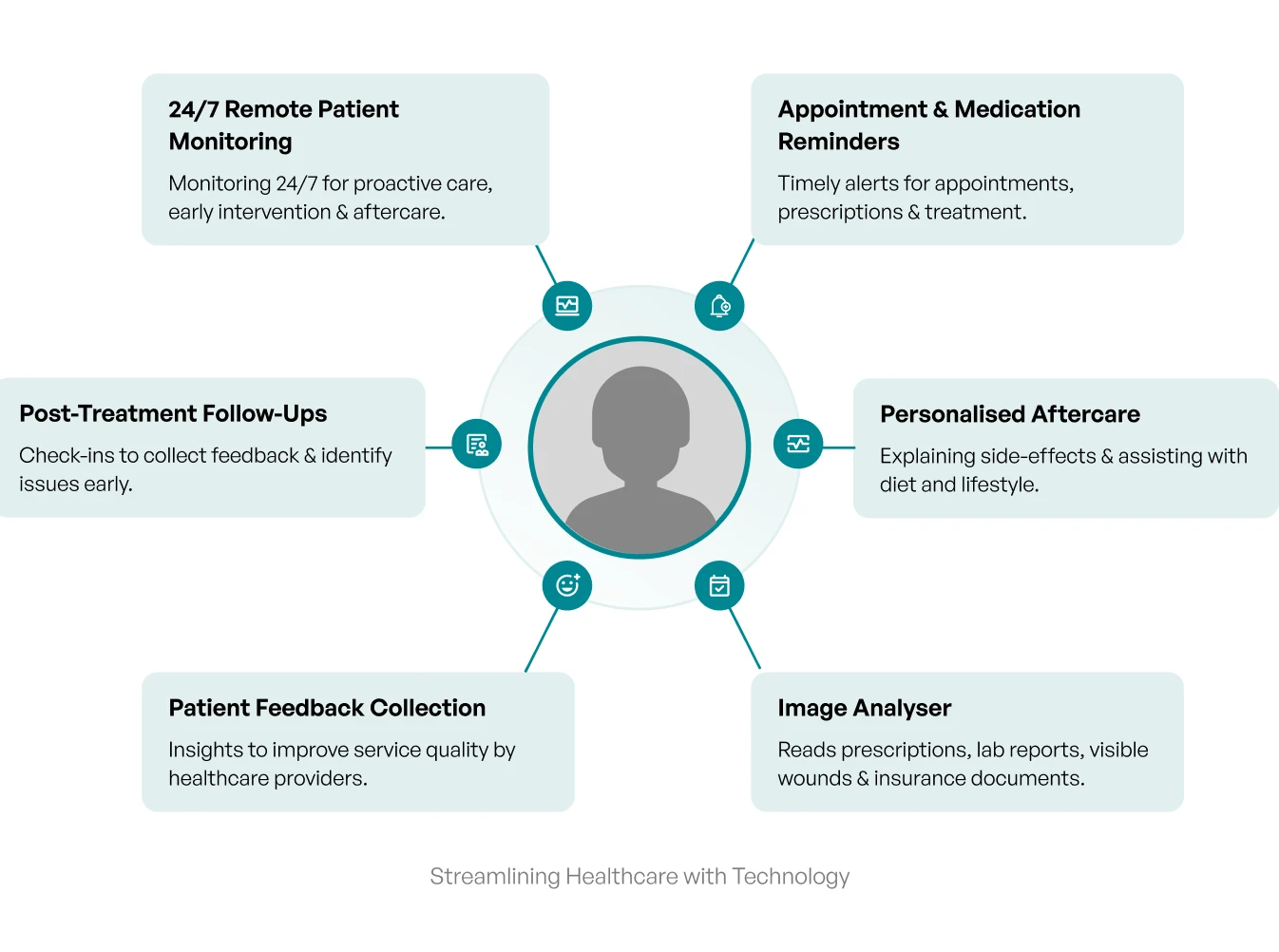
24/7 Medical Information Access
Administrative Automation for Hospitals
Proactive Reminders & Adherence
Real-Time Analytics & QA
- English, Hindi & regional language fluency
- Medical intent understanding
- Context memory across visits
- Human handoff with full history
- DPDP data protection alignment
- ABDM consent framework
- NABH security controls
- End-to-end encryption
- Role-based access & audit logs
Conversational Intelligence
Security & Compliance
| Capability | Traditional Chatbot | AI Agent (e.g., Nugget) |
|---|---|---|
| Understand Hindi/Hinglish queries | Limited | Native understanding |
| Remember patient history |  |  |
| Book OPD & update HMS | | |
| Process TPA queries | | |
| Image extraction (prescription) | | |
| Human handoff with context | | |
Medical AI chatbots are becoming core to India's digital health stack. They reduce OPD load, simplify insurance workflows, and give patients 24/7 guidance, while staying within DPDP, ABDM, and NABH guardrails.
Platforms like Nugget combine conversational AI, image understanding, and Customer 360 to deliver outcomes not just answers.
Can a chatbot replace a doctor?
Is patient data safe?
Do these chatbots work in Indian languages?
TL;DR
Medical AI chatbots are becoming the first point of contact for patients by providing instant, 24/7 support across appointments, insurance, and healthcare queries.
AI can streamline patient journeys by automating symptom triage, appointment scheduling, follow-ups, and administrative workflows, reducing the burden on hospital staff and support teams.
Modern healthcare AI platforms go beyond answering questions by enabling personalized care, medication reminders, and proactive patient engagement throughout the care journey.
Capabilities such as image understanding allow AI systems to process prescriptions, lab reports, insurance documents, and other patient submissions more efficiently.
Real-time analytics help healthcare providers identify patient concerns, operational bottlenecks, and opportunities to improve patient experience and clinical operations.
When evaluating a medical AI platform, healthcare organizations should prioritize conversational intelligence, multilingual support, seamless human handoffs, and enterprise-grade security and compliance.
The right AI platform can help hospitals, clinics, and insurers deliver faster, more accessible, and more personalized healthcare experiences at scale while supporting India's evolving digital health ecosystem.