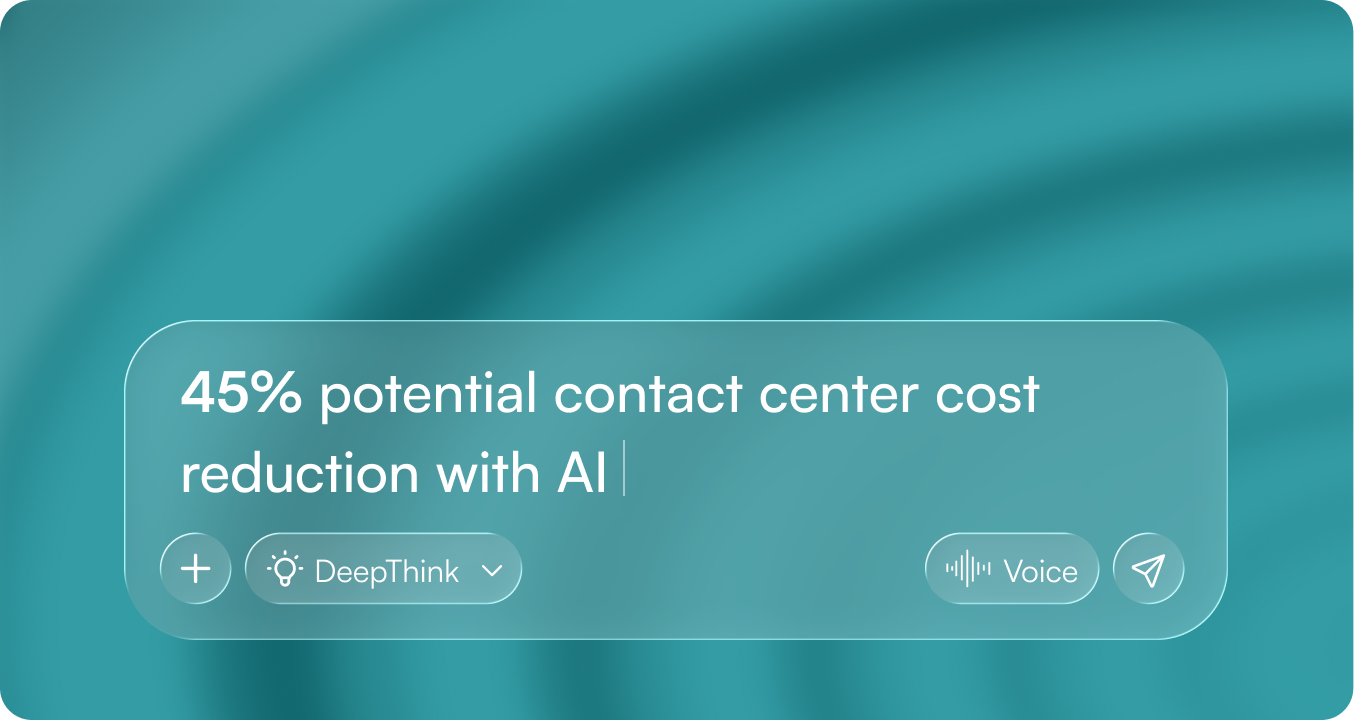
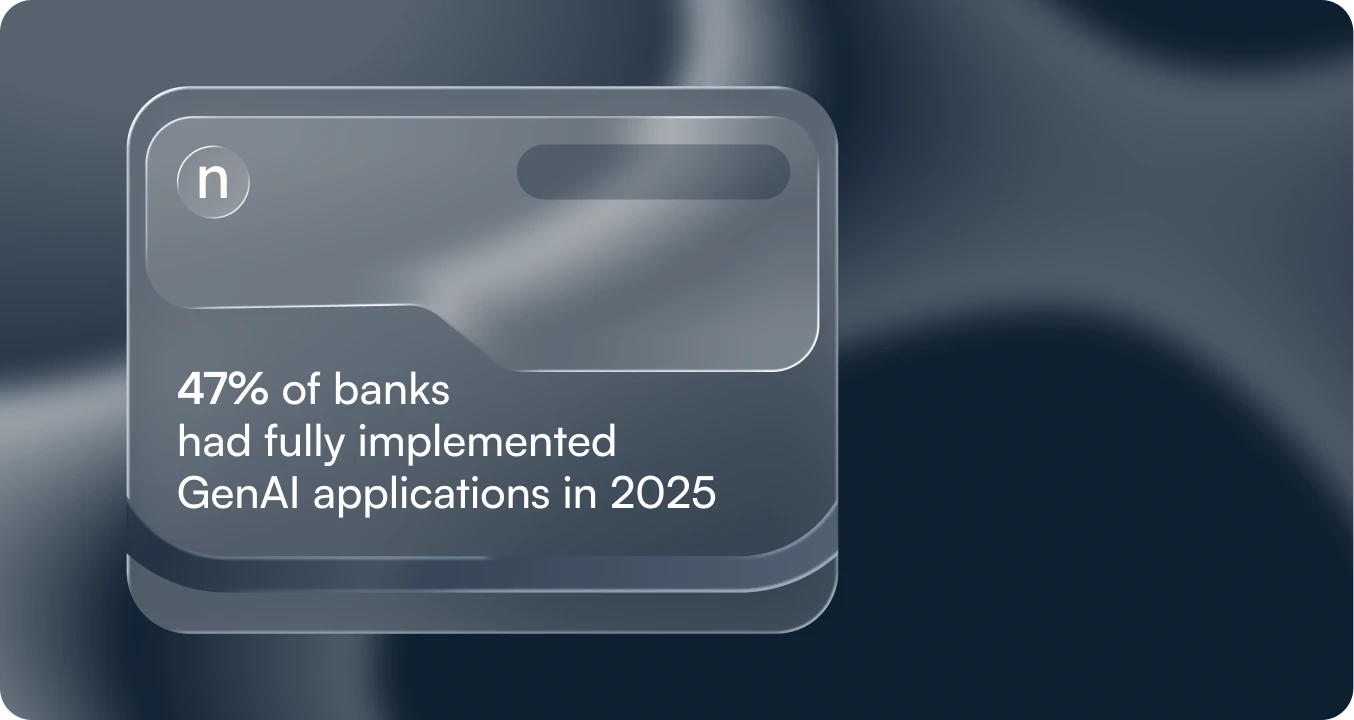
Why AI Is Becoming Core to Financial Services Customer Experience
Written by: Manya Singh
Last updated: Jul 27, 2026
5 mins

AI is no longer an experimental technology in financial services. It has become a core operational layer shaping how banks, fintechs, and financial institutions engage customers, manage risk, and scale support.
From balance checks and transaction queries to fraud alerts and service escalations, AI is redefining customer experience by making interactions faster, more personalised, and available at all times. At the same time, financial institutions face rising customer expectations, tighter compliance requirements, and increasing pressure to operate efficiently.
This blog explores how AI in financial services enhances customer experience, with a focus on conversational AI, intelligent automation, and unified CX systems, and how platforms like Nugget enable financial institutions to operationalise AI at scale.
AI has become a foundational capability in modern financial services. Its ability to process large volumes of data, identify patterns, and continuously learn from customer interactions allows financial institutions to operate at a speed and scale manual systems cannot match.
Unlike traditional rule-based systems, AI models adapt over time. They improve accuracy, personalise responses, and support real-time decision-making capabilities that are especially critical in an industry defined by high customer expectations and operational complexity.
For years, customer support in financial services was constrained by:
- Limited service hours
- Long wait times
- Fragmented systems across channels
Through conversational interfaces, intelligent automation, and predictive insights, financial institutions can now deliver:
- Instant, 24/7 customer support
- Context-aware interactions across channels
- Proactive assistance instead of reactive issue resolution
This shift transforms customer support from a cost centre into a strategic differentiator, one that improves customer loyalty while keeping operational overhead under control.
- Check account balances
- Track transactions
- Schedule payments
- Resolve service queries
- Chatbots on mobile apps and websites for instant text-based support
- Voicebots integrated into IVR systems to reduce call queues
- Social bots on platforms like WhatsApp or Instagram for quick engagement
- Always-on account support for balances, transactions, and alerts
- Personalised financial insights based on spending behaviour
- Guided processes for loans, KYC, or service requests

What Conversational AI Means for Finance
In financial services, conversational AI represents production-grade systems that enable customers to interact with institutions using natural, free-form language across voice and text channels, while operating within strict accuracy, security, and compliance boundaries.
These systems go beyond scripted responses. They interpret intent, context, and conversation history to automate routine interactions that previously required human intervention, without compromising reliability.
Customers can now:
All through natural conversation, without navigating rigid menus or waiting for agents.
By handling high-volume, low-complexity queries, conversational AI significantly reduces load on support teams while improving response times.

Real-World Applications across Channels
Financial institutions deploy conversational AI across multiple touchpoints to meet customers where they are:
A widely cited example is Bank of America's chatbot, Erica, which has handled billions of customer interactions, demonstrating how scalable conversational AI has become in mainstream banking.

Practical CX Improvements Enabled by Conversational AI
Conversational AI improves customer experience in tangible ways:
This automation simplifies complex financial journeys, making services more accessible while maintaining accuracy and consistency.
Many platforms add AI as an overlay. Nugget is built AI-native.
Instead of operating separate tools for chat, voice, ticketing, and analytics, Nugget unifies customer experience workflows into a single agentic AI platform, designed specifically for scale, security, and continuity.
This AI-native architecture eliminates fragmentation and enables financial institutions to operate with shared context across channels and teams.
- AI agents; chatbots and voicebots
- Support ticketing and assignments
- CRM and operational workflows
- Customer identity across channels
- Conversation history
- Transaction and account data
- Past issues and resolutions

Unified Workflows across Channels
Customer journeys in finance rarely stay within one channel. A query may start on chat, escalate to voice, and require ticket-based follow-up.
Nugget unifies:
Context persists across every interaction, ensuring customers never repeat themselves and agents never start blind.

Lifeline: A Single Source of Truth
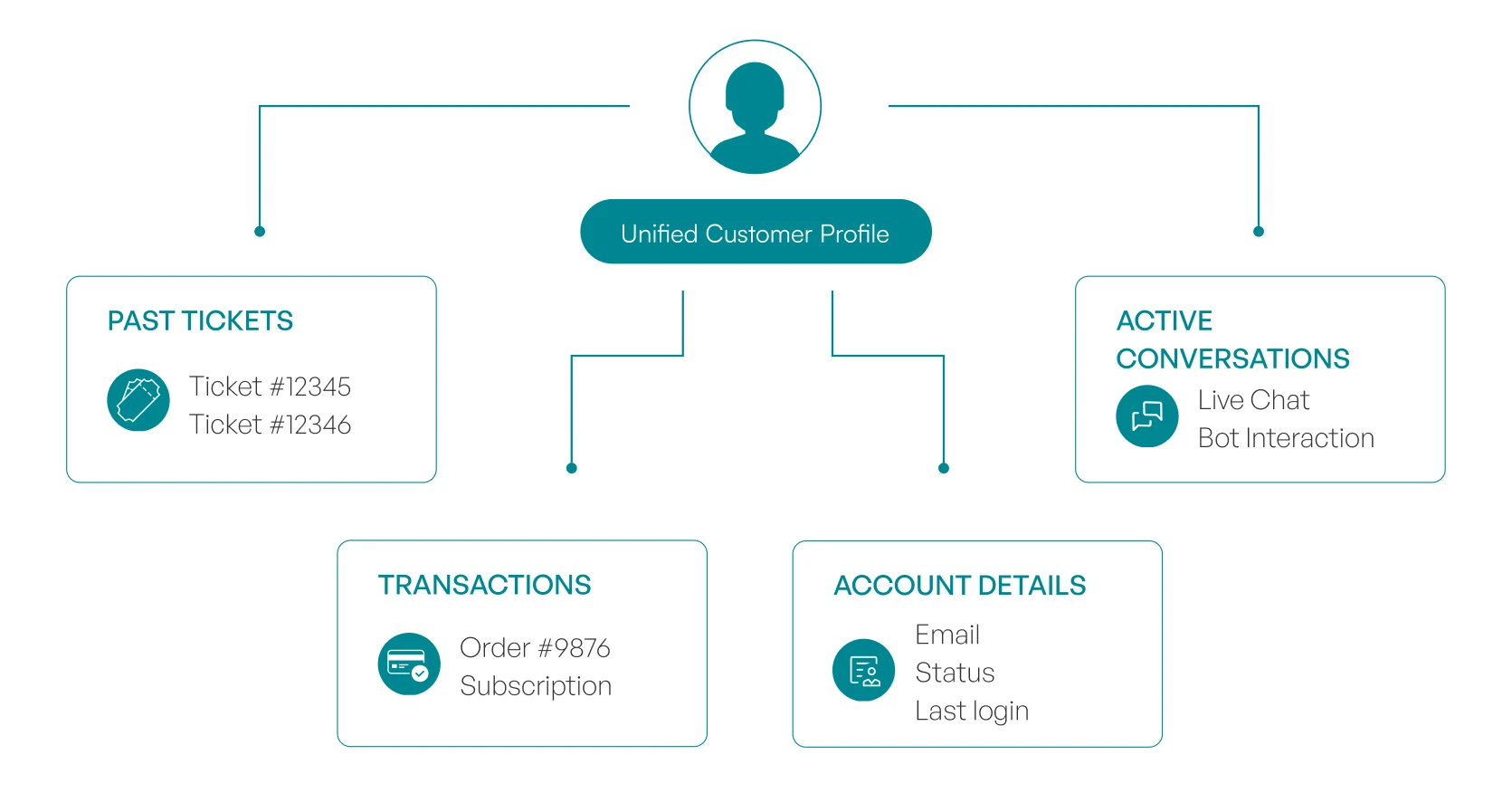
At the core of Nugget's platform is Lifeline, its 360-degree customer view.
Lifeline consolidates:
This unified view enables both AI agents and human agents to operate with full context. Interactions become faster, more relevant, and more empathetic, without compromising compliance or data security.

Seamless Integration with Enterprise Systems
The result is operational efficiency without disrupting existing infrastructure.

Intelligent Ticketing and Multi-Channel Routing

Automated Quality Checks and Analytics

Intelligent Escalation to Human Agents
- Higher CSAT through consistent, always-available support
- Full QC coverage for compliance-heavy environments
- Lower cost per contact through automation

Faster Resolution and Higher First-Contact Resolution

Improved CSAT, QC Coverage, and Cost Efficiency
Common concerns include regulatory compliance, data privacy, and legacy integration.
AI-native platforms like Nugget address these through:
- API-first architecture
- Secure, privacy-first design
- Seamless integration with existing systems
This allows financial institutions to adopt AI incrementally without rebuilding their tech stack.
AI in financial services is no longer optional; it is foundational to modern customer experience. From conversational AI and intelligent automation to unified Customer 360 visibility, AI enables faster resolution, lower operational cost, and experiences that feel responsive rather than transactional.
Platforms like Nugget demonstrate how agentic AI can be embedded directly into financial CX, connecting conversations, actions, and insights into one intelligent system. As customer expectations continue to rise, institutions that treat AI as a core operating layer will lead the next phase of financial experience.
How does AI improve customer experience in financial services?
What challenges do financial institutions face with AI adoption?
Is AI adoption accelerating in Indian financial services?
TL;DR
AI is becoming the foundation of customer experience in financial services, enabling faster, more personalized, and always-on support.
Conversational AI helps customers resolve routine banking and financial queries naturally across voice and text channels.
AI-native platforms unify conversations, customer context, and workflows to deliver seamless experiences across touchpoints.
Intelligent automation improves ticket routing, quality monitoring, and human handoffs while maintaining compliance and security.
Financial institutions adopting AI can improve resolution rates, reduce operational costs, and scale customer support more efficiently.