AI for Loan Servicing and Application-Status Queries
Written by: Manya Singh
Published On: Oct 12, 2026
8 mins

In consumer, mortgage, and commercial lending, the highest-volume contact center driver is also the simplest: status and servicing checks. Borrowers repeatedly ask straightforward questions regarding personal loan files or mortgages: "Where is my loan application?", "Which documents are still missing?", and "Why hasn't my recent payment posted?"
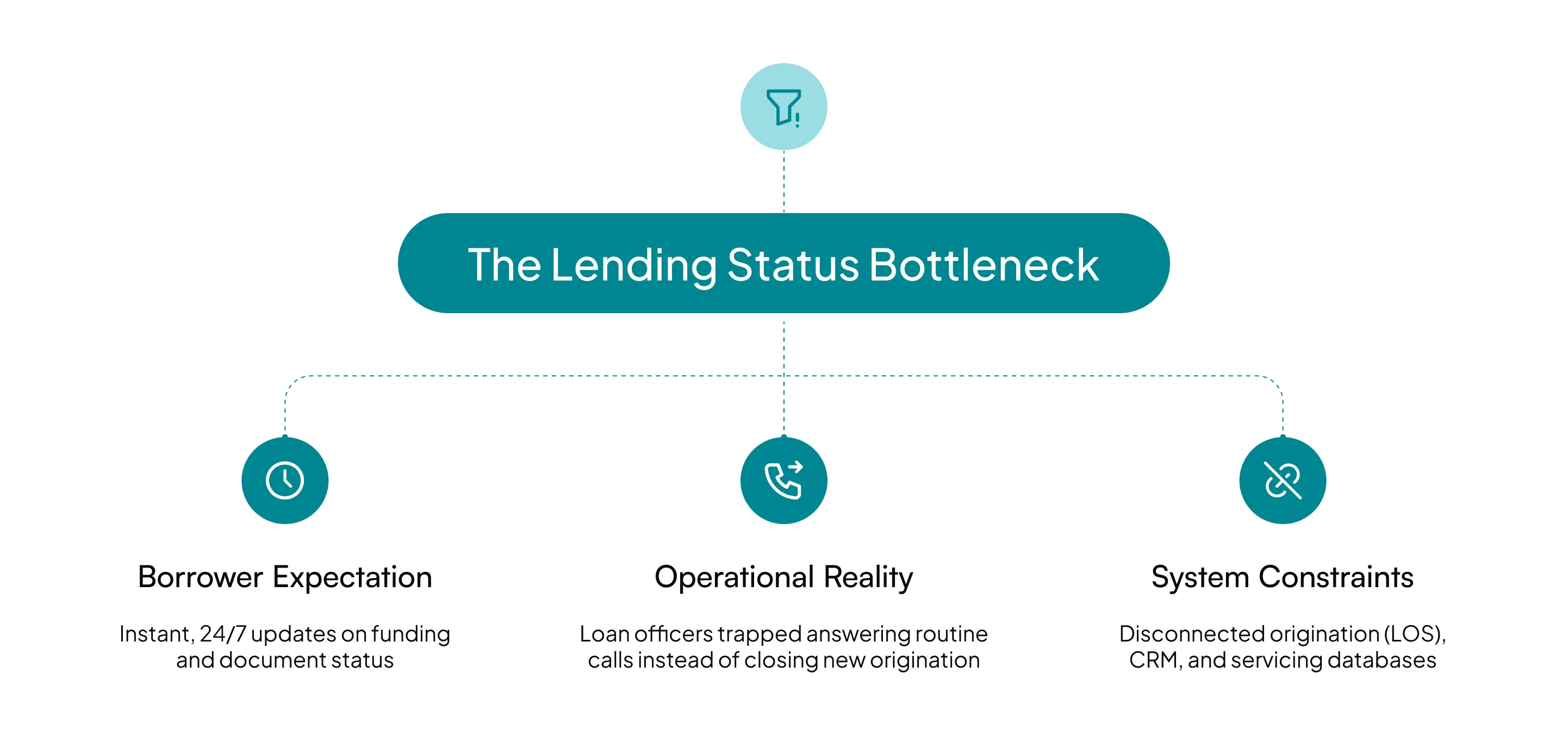
When borrowers cannot get immediate answers, call queues back up, drop-off rates spike during origination, and a loan officer spends hours answering repetitive status checks rather than closing deals.
Deploying AI for loans specifically for loan servicing and application-status queries solves this operational strain. This guide covers how artificial intelligence handles loan queries, why real-time system write access is essential, where automated authority ends, and how to build a scalable support model for lending institutions.
Origination Drop-Off Driven by Uncertainty
Misallocation of High-Value Talent
Disconnected Systems and Fragmented Data
To unclog queues effectively, AI solutions must handle targeted servicing and status tasks end-to-end rather than offering static FAQ answers. Leveraging machine learning, natural language processing, and predictive analytics, an AI lending platform streamlines manual processes across the entire lending process.
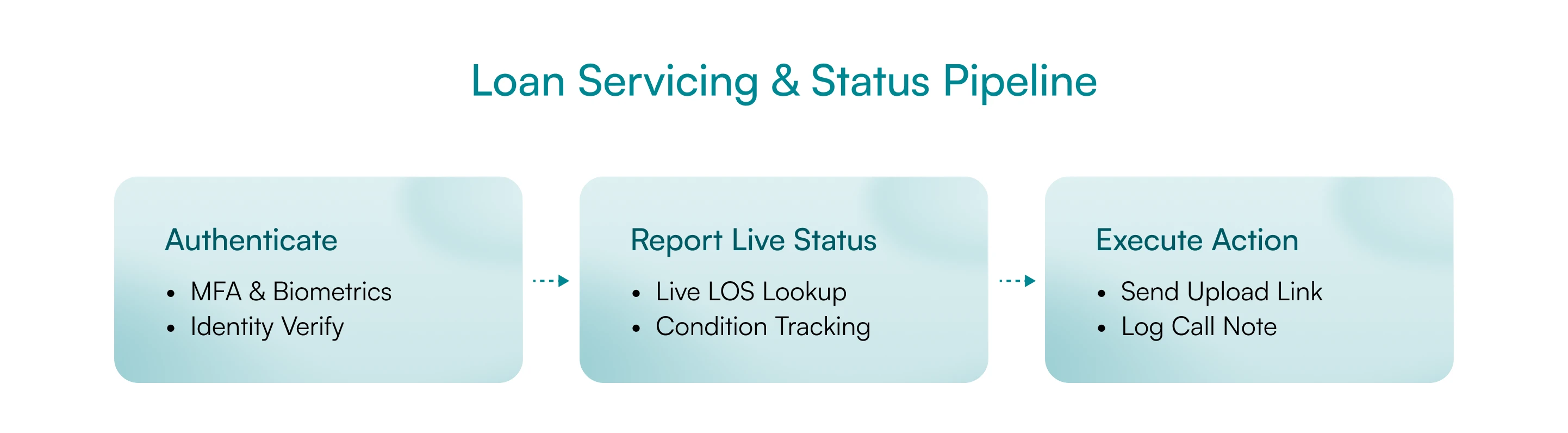
The scope of automated AI agents handling loan status and servicing includes:
- Borrower Authentication: Verifying borrower identity through secure multi-factor authentication (MFA) or biometric prompts before revealing sensitive financial data.
- Live Application Tracking: Retrieving real-time loan progress directly from the Loan Origination System (LOS) using real time data to report exact approval stages.
- Outstanding Document Identification: Identifying missing conditions (such as W-2s, bank statements, or pay stubs) using intelligent document processing to parse unstructured data and trigger secure upload links via SMS or WhatsApp.
- Core Servicing Queries: Answering post-funding inquiries regarding escrow balances, monthly income requirements, bank transactions, payment posting verifications, and due-date adjustments.
- Automated System Logging: Writing structured interaction notes back into servicing tools or CRMs during the call turn.
Maintaining credibility across financial institutions requires setting strict boundaries for automated systems. An AI agent is a status reporter and document collector, not a loan officer or financial advisor.
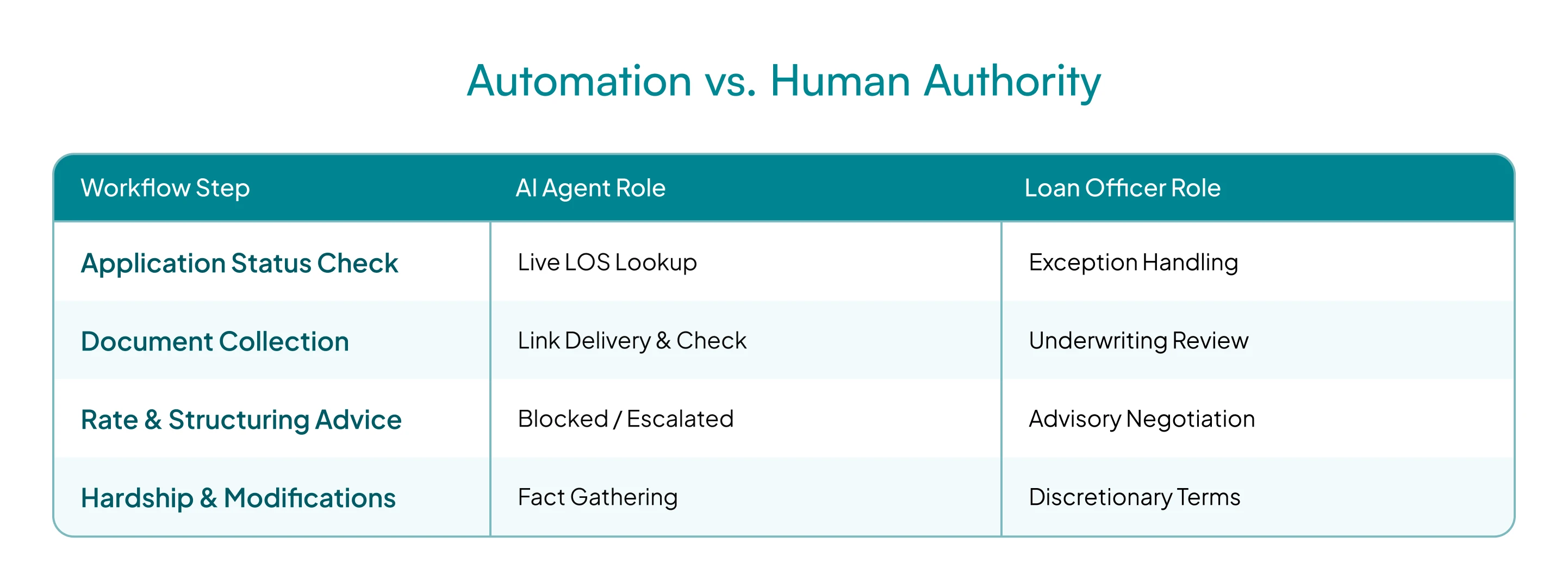
An AI agent can report loan statuses, clarify missing conditions, and process payment lookups. However, rate negotiation, loan restructuring, financial advice, and hardship modifications must remain strictly with a human loan officer. Human oversight remains vital whenever evaluating complex credit history, calculating debt to income ratio, or conducting a comprehensive risk assessment for securing loans.
Explicitly defining this boundary prevents "agent washing," where basic retrieval scripts are incorrectly marketed as fully autonomous decision engines.
Many organizations attempt to deploy status bots that only read data from a nightly batch export. This approach fails in production.
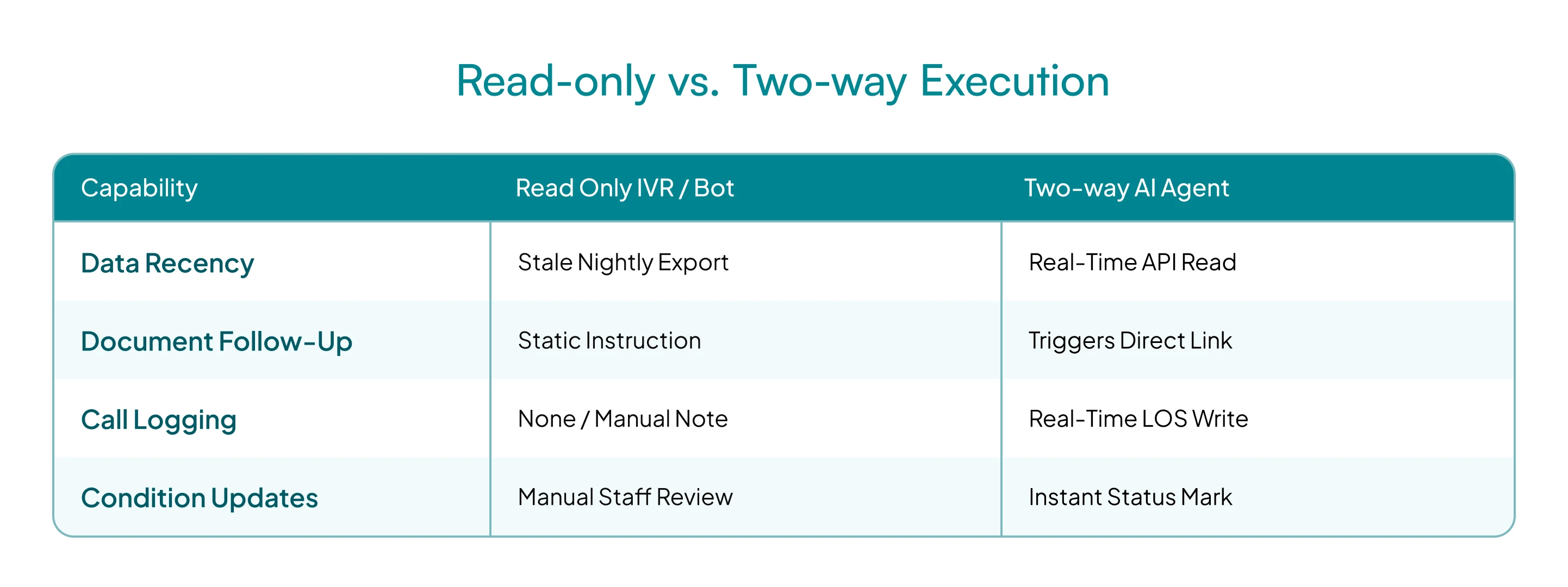
A status check is rarely just a query; it is a trigger for action. When a borrower calls to ask why their application is stalled, telling them loan documents are missing is only half the solution.
A production-grade AI agent requires two-way write access. It must trigger a secure upload link to the borrower's mobile phone, update the condition flag in the LOS, and write an interaction log directly into the record. Without real-time write access, the system simply creates more manual work for backend staff, increasing processing time.
Loan servicing is not a single support use case. A borrower asking, "Where is my application?" may need a completely different workflow from someone asking why their payment failed, when their next EMI is due, or whether a document has been received.
The challenge is that these answers typically sit across different systems, and the conversation itself may move between channels. Nugget connects the conversational layer to the underlying lending workflow so borrowers can get information, complete servicing actions, or be routed to the right human without restarting the interaction.
What Nugget Handles Across the Servicing Journey
- Application & Disbursement Status: Retrieve live application status, pending steps, approval updates and disbursement information
- Payments & Repayments: Answer payment questions, surface due amounts and dates, identify failed or pending payments, and guide the next action
- Document & KYC Follow-Ups: Track submitted documents, identify missing information and trigger follow-ups without requiring borrowers to contact support again
- Loan Account Servicing: Handle questions around balances, repayment schedules, account details and servicing requests using current borrower data
- Exceptions & Escalations: Recognize when a request requires policy interpretation, financial advice or human judgment and transfer the interaction with relevant context intact
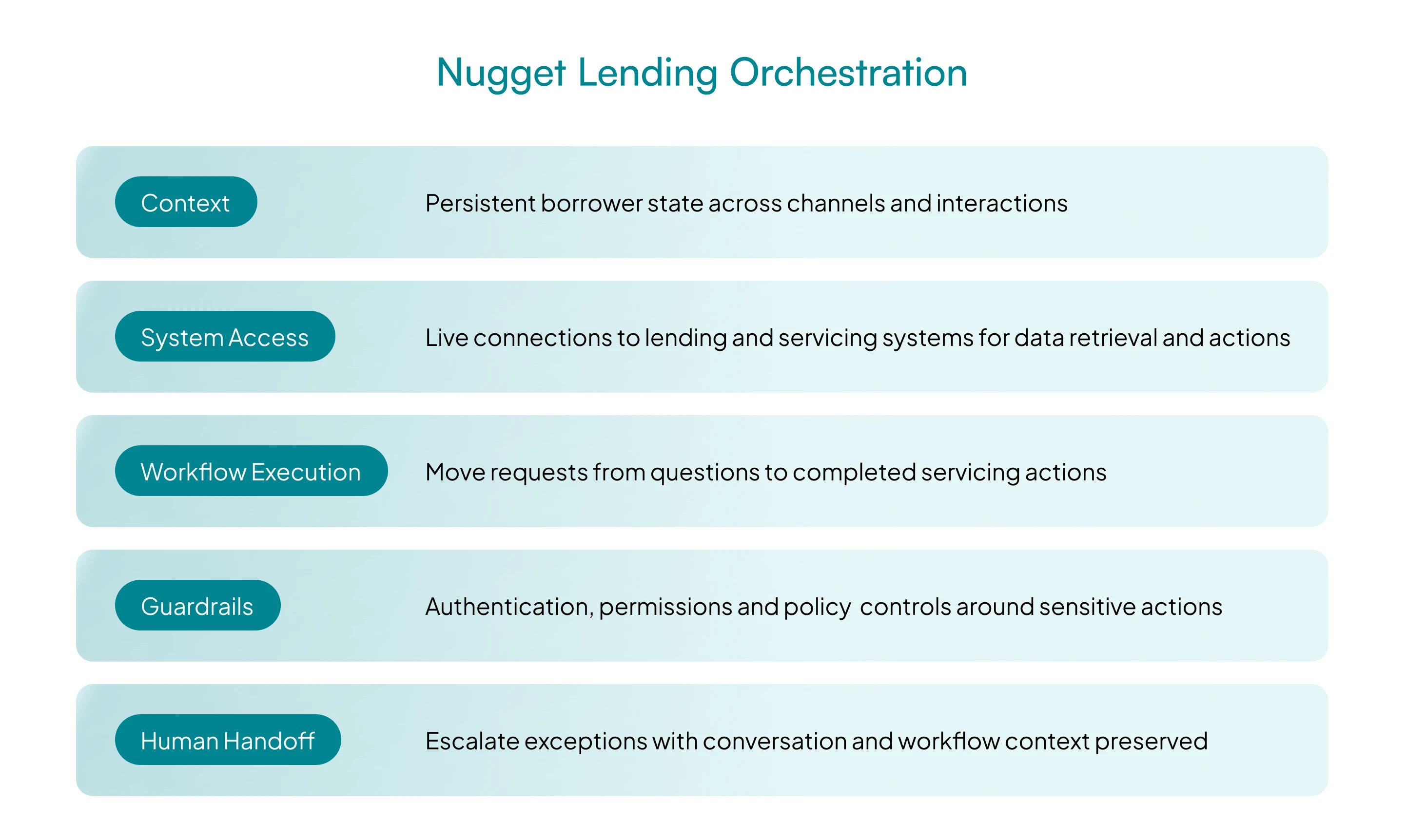
A borrower might start on WhatsApp asking about a missing KYC document, follow up through voice about their application status, and later ask why their repayment failed. Nugget can carry the relevant conversation and workflow context across those interactions rather than treating each contact as a new ticket.
More importantly, the agent is not limited to retrieving information. Where the workflow and permissions allow it, Nugget can read live lending data, initiate the relevant action, validate the result and communicate the outcome.
That distinction is important for loan servicing: the goal is not to automate conversations about lending workflows. It is to automate the workflows that sit behind those conversations.
Deploying AI in lending to automate routine status queries accelerates digital transformation, driving a competitive advantage and quantifiable improvements in financial performance.
Enterprise data highlights the impact of artificial intelligence AI adoption across service operations and collection management financial institutions:
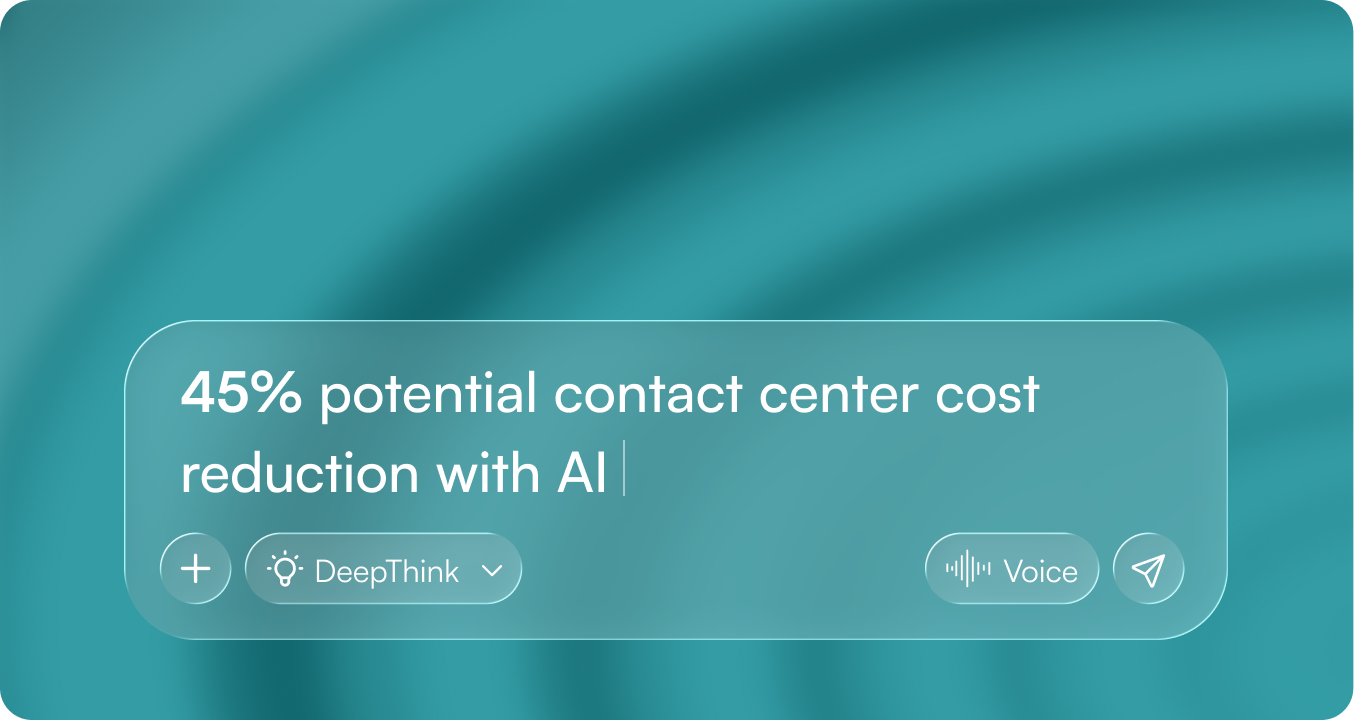
- Lower Operating Costs: According to research published by McKinsey & Company, banking investments in contact-centre AI promise cost reductions of 30 to 45 percent alongside significant improvements in customer experience.
- Increased Team Productivity: Data from Deloitte shows that 64% of service leaders report higher agent productivity from AI, with 39% reporting lower cost per contact.
Legacy System Integration Complexity
Product-Specific Disclosure Variations
Preventing Unintended Financial Advice and Risk Mitigation
Automating loan servicing and status queries is not about replacing loan officers or altering loan agreements. It is about removing routine tasks and administrative noise so staff can focus on advising borrowers, evaluating loan approvals, and closing deals. When a loan officer collects documents, automated systems verify identity, deliver real-time LOS updates, trigger direct upload links, and log notes automatically, converting manual processes into fast, transparent systems.
When powered by a deterministic platform like Nugget, AI agents convert routine status checks from a bottleneck into an instant approval feel that elevates the overall customer experience.
How do AI agents verify borrower identity before sharing loan status?
Can an AI agent accept and process uploaded loan documents?
What happens when a borrower asks for rate advice or loan modification terms?
TL;DR
Status checks drain origination velocity. Routine "where is my loan" calls tie up expensive loan officers who should be closing new deals.
AI agents authenticate borrowers, provide live LOS updates, send secure document upload links, and log interaction notes automatically.
AI agents handle status reporting and document collection, while rate advice, loan structuring, and hardship decisions remain with human loan officers.
Systems must trigger upload links, update condition flags, and write call logs into core ledgers in real time.
McKinsey research shows banking investments in contact-centre AI promise cost reductions of 30 to 45 percent.