10 Best Conversational AI Platforms for Enterprises
Written by: Manya Singh
Published On: Sep 21, 2026
9 mins

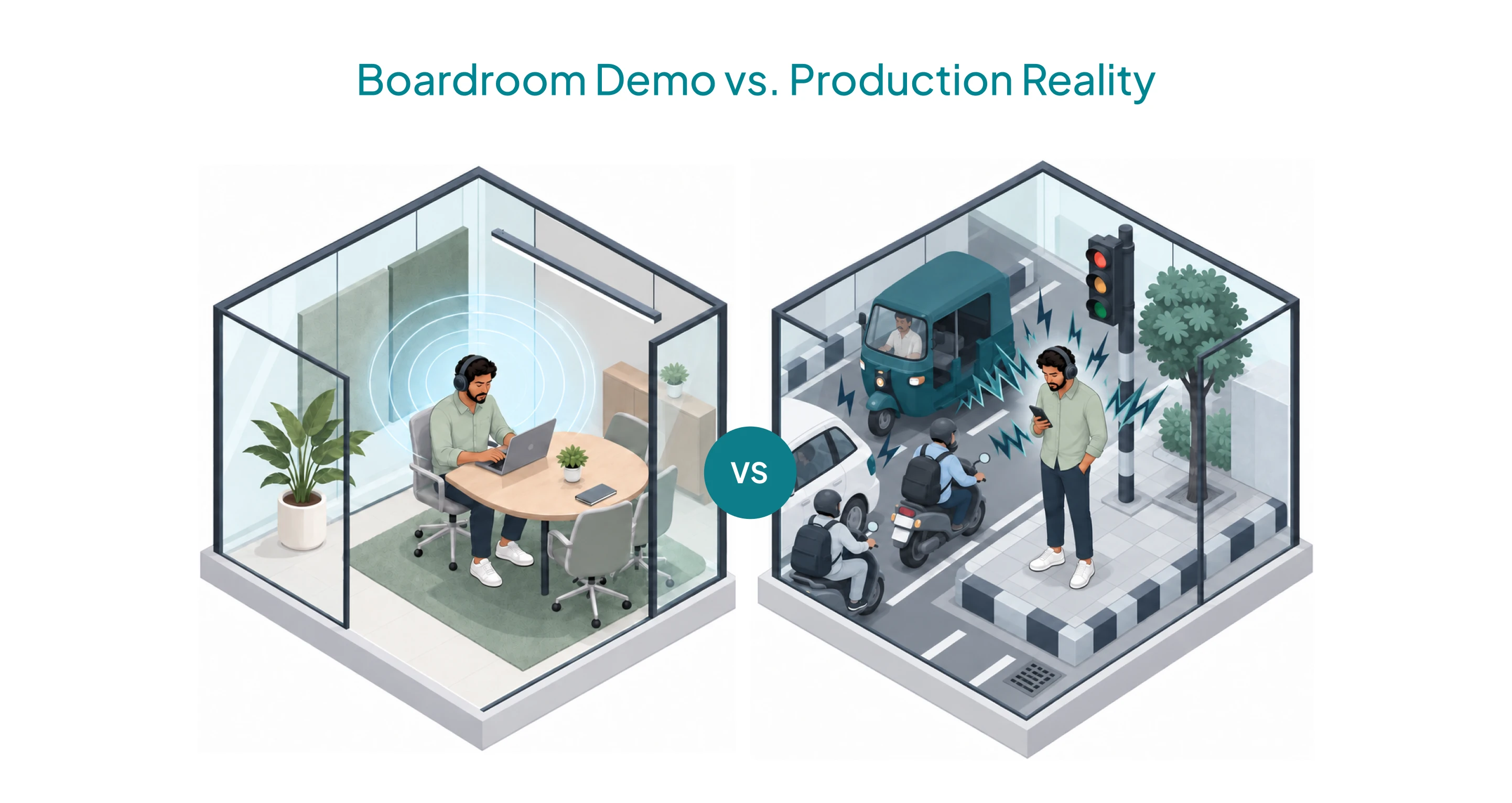
Let us get one thing straight right out of the gate: most enterprise software buyers are being sold a fairy tale. If you have sat through a vendor demo recently, you have seen a flawless conversation on a clean connection.
Then you sign the contract, deploy to production, and reality hits.
The agent stutters on regional accents. It drops context during mid-sentence interruptions. Worst of all, it deflects customers without ever resolving their problem.
That massive execution gap exists because most buyers choose software based on canned demos rather than production reality. Enterprise data bears this out: only 7% of enterprises have reached full operational scale with agentic AI, while 68% remain stuck experimenting or developing.
If you want a generic software matrix that treats toy chatbots and enterprise infrastructure as equals, this is not the guide for you. This one is written for buyers who have to live with the decision in production.
Before looking at vendors, strip away the marketing gloss. A real enterprise conversational AI platform is not just an API wrapper around a language model.
At an enterprise level, conversational artificial intelligence is an orchestration engine powered by artificial intelligence, machine learning, and deep integrations into the systems where work actually happens.
The difference comes down to three operational capabilities:
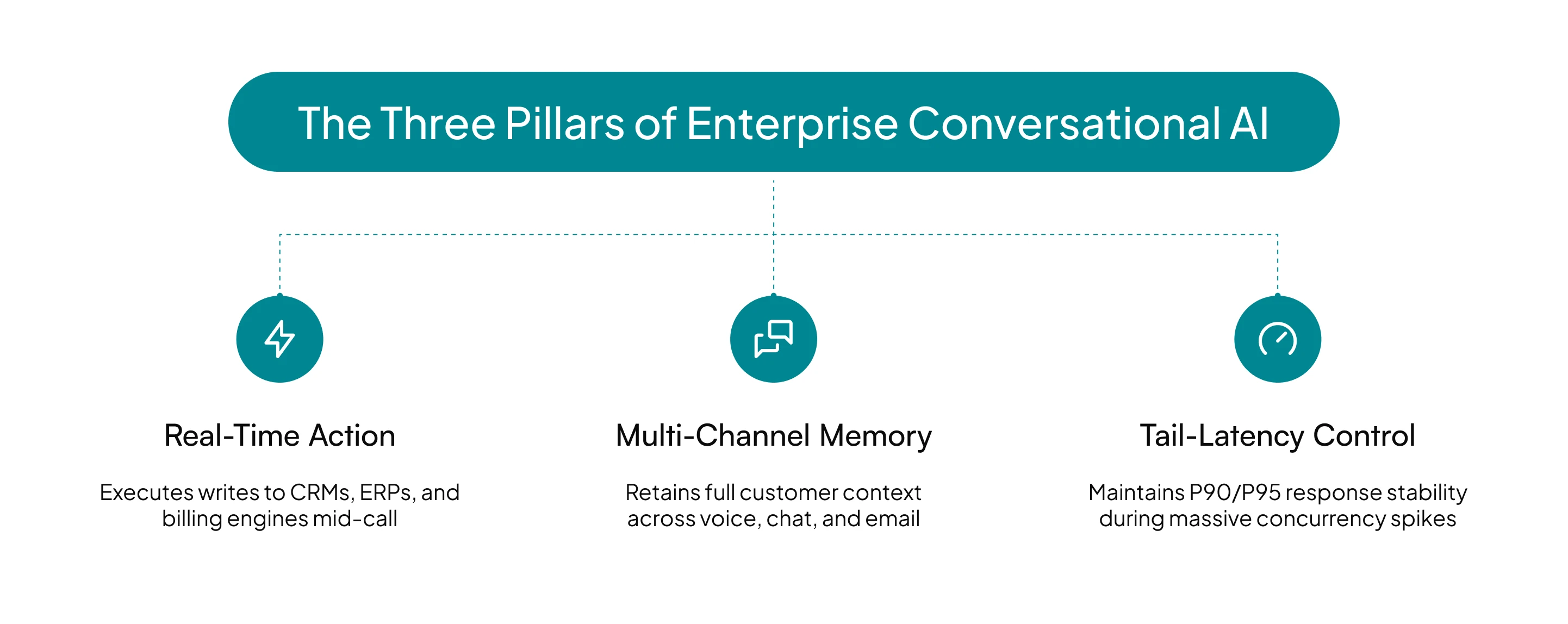
- Resolution over Containment: It does not just answer FAQs or trap customers in endless loops; it validates intent and completes tasks end to end.
- Unified Omnichannel Memory: It maintains a persistent context layer across multi turn conversations, whether a customer texts on messaging, calls the phone line, or emails later.
- Determinism at Scale: It enforces rigid business rules, role-based safety permissions, and zero-hallucination guardrails before the output ever reaches the customer.
When evaluating modern conversational AI platforms, throw out the standard RFP spreadsheet.
Focus on the structural mechanics that dictate whether a platform survives contact with real production traffic:
- Real-Time System Execution: Can the conversational AI software read, validate, execute a transaction, and write back to your existing enterprise systems within a single conversation?
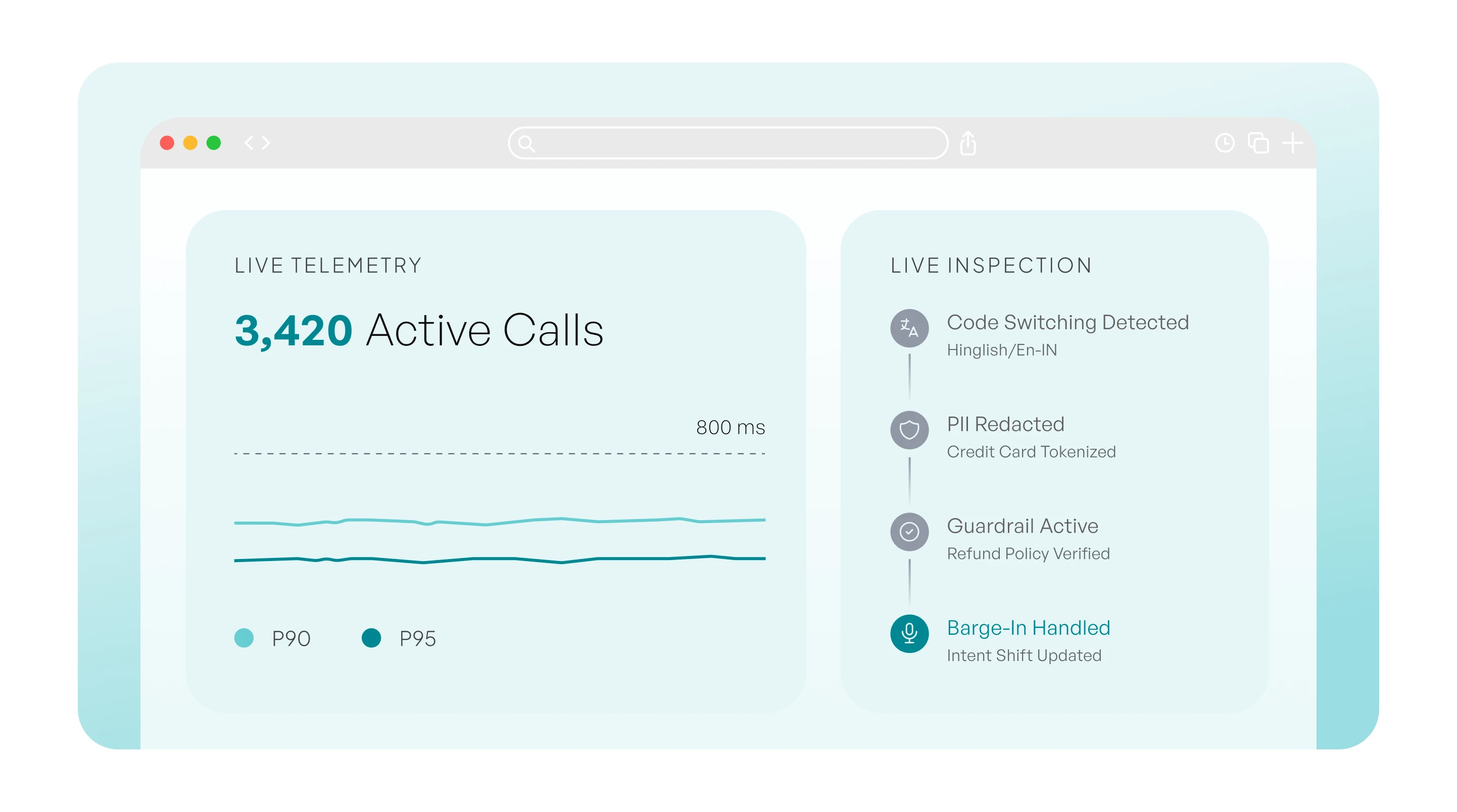
- Production Concurrency and P95 Latency: How do conversational AI systems behave when 3,000 customers call simultaneously during an operational incident?
- Dialect and Code-Switching Resilience: How does the automatic speech recognition engine handle real-world human speech? Customers do not speak in benchmark English.
- 100% Observability: Does the system rely on manual QA sampling of less than 5% of customer support calls, or does it run continuous, automated conversation-level evaluation across every interaction?
| Platform | Primary Focus | Best For |
|---|---|---|
| 1. Nugget | Autonomous Resolution | Enterprise Scale & Voice AI |
| 2. Decagon | Enterprise Support AI | Autonomous Customer Operations |
| 3. Sierra | Brand Agent OS | Fortune 500 Customer Experience |
| 4. Bland AI | Voice Infrastructure | Developer-First Voice Agents |
| 5. Fin (Intercom) | Multilingual CX | Support & Knowledge Automation |
| 6. Kore.ai | Enterprise Workflows | No-Code Bot Administration |
| 7. Gnani.ai | Voice-First Automation | Multilingual Telephony |
| 8. Vapi | Voice Agent API | Programmable Voice Pipelines |
| 9. Bolna | Voice AI Workflows | Open Voice Agent Building |
| 10. Retell AI | Low-Latency Telephony | Developer Voice APIs |
- Unrivaled Voice & Telephony Engine: Maintains flat P90/P95 latency profiles even past 3,000+ concurrent calls, combining voice AI agents with full-duplex audio handling.
- Native Multi-Agent Orchestration: Specialized AI agents coordinate across complex enterprise workflows while preserving full context across handoffs.
- Dialect & Code-Switching Mastery: Built specifically to handle regional accents, background acoustic noise, and mid-sentence language switching.
- 100% Automated QA & Observability: Automatically monitors every live interaction for quality drift, alerting technical teams before minor issues become customer-facing failures.
- Action-oriented architecture designed to automate customer interactions, execute refunds, update account details, and handle cancellations.
- Strong guardrails combining plain-language workflows with code-level validation for sensitive actions.
- High user rating across mid-market and enterprise tech brands.
- Impressive enterprise roster across retail, financial, and consumer services.
- Strong focus on brand voice, security compliance, and multi-model routing to enhance human conversation.
- Native PCI-certified infrastructure for processing secure phone payments.
- Developer-friendly API infrastructure featuring custom webhooks and prompt chaining.
- Dedicated server allocation options for high-volume outbound campaigns.
- Granular control over audio stream injection and custom SIP trunking.
- Deep integration with Intercom's help desk, knowledge base, and inbox ecosystem to answer questions fast.
- Multilingual support across 45+ languages with automated ticket summarization.
- Transparent per-resolution pricing model.
- Comprehensive enterprise administration, security, and role-based access controls across multiple enterprise systems.
- Pre-built functional templates for IT, HR, and banking domains to streamline internal support.
- Flexible deployment options across cloud, hybrid, and on-premises infrastructure.
- Proprietary speech-to-speech AI models built for complex telephony environments.
- Deep multilingual support across regional dialects, particularly in South Asian languages.
- Built-in speech analytics and automated voice testing capabilities.
- High flexibility allowing developers to swap STT, LLM, and TTS models on the fly.
- Simple integration with providers like ElevenLabs, Deepgram, and OpenAI to power generative AI voice capabilities.
- Granular call logs with full transcriptions and webhooks for custom backend routing.
- Open architecture allowing developers to orchestrate complex conversations and execution flows.
- Flexible API integrations for linking voice calls directly to internal databases.
- Cost-effective execution for targeted voice automation tasks.
- Optimized conversational voice stack designed to minimize latency and handle interruptions.
- Extensive multilingual support spanning 55+ languages with voice cloning capabilities.
- Clear API documentation and developer dashboard tools.
Nugget
Nugget was not built inside a research lab to win venture capital demos. It was forged in the fire of real-world operational necessity.
Having processed billions of live conversations in production, Nugget sits at No. 1 because it fundamentally solves the problems other platforms discover only after go-live.Nugget bridges the gap between simple conversational interfaces and complex backend execution, offering deep native orchestration across enterprise systems.Key Strengths
Best For: Enterprises across banking, retail, logistics, and digital commerce that require a production-tested, high-concurrency AI platform engineered for verified resolution.
Decagon
Decagon has quickly risen as a prominent enterprise customer support platform, focusing on autonomous virtual agents that act rather than simply answer.
Key Strengths
Drawbacks: Pricing and onboarding are oriented heavily toward large enterprise contracts, making it less accessible for smaller mid-market implementations.
Best For: Fast-growing tech enterprises seeking autonomous chat and ticket resolution with code-level safety guardrails.Sierra
Founded by Bret Taylor and Clay Bavor, Sierra positions itself as an "Agent OS" for large consumer brands seeking to transform customer experience.
Key Strengths
Drawbacks: Multi-model routing can occasionally introduce noticeable voice latency during live phone calls.
Best For: Fortune 500 consumer brands seeking a high-touch, executive-backed conversational platform.Bland AI
Bland AI provides a developer-first platform designed to send and receive phone calls using customizable AI voice agents.
Key Strengths
Drawbacks: Requires dedicated developer resources to build and maintain production-grade conversational logic.
Best For: Engineering teams looking to build programmatic inbound and outbound voice pipelines from scratch.Fin (Intercom)
Fin is Intercom's standalone conversational AI agent, designed to resolve support requests autonomously across chat and messaging channels.
Key Strengths
Drawbacks: Tightly coupled with the Intercom ecosystem, making standalone voice or external CCaaS deployment challenging.
Best For: Existing Intercom users seeking instant, high-resolution AI support across web and app chat channels.Kore.ai
Kore.ai provides a mature, enterprise-grade no-code platform designed for large organizations looking to deploy virtual assistants across internal and external use cases.
Key Strengths
Drawbacks: The administrative interface carries a steep learning curve, making iterative changes dependent on specialized platform administrators.
Best For: Corporate IT departments seeking a standardized builder framework for enterprise process automation.Gnani.ai
Gnani.ai is a voice-first conversational AI platform specializing in speech technologies, natural language understanding, and multilingual telephony.
Key Strengths
Drawbacks: Developer documentation and self-service onboarding can require extra support during setup.
Best For: Telecom, banking, and utility enterprises requiring deep regional voice and speech recognition capabilities.Vapi
Vapi is an API-based voice platform that allows developers to assemble voice agents using modular speech-to-text, LLM, and text-to-speech providers.
Key Strengths
Drawbacks: Lacks out-of-the-box enterprise guardrails, requiring engineering teams to construct their own state management and security layers.
Best For: Developers building custom voice prototypes who need complete control over every layer of the voice stack.Bolna
Bolna is an open, developer-centric platform designed to construct, deploy, and scale autonomous voice workflows.
Key Strengths
Drawbacks: Smaller ecosystem and support footprint compared to established enterprise platforms.
Best For: Startups and technical teams looking for an agile, developer-focused framework to run targeted voice experiments.Retell AI
Retell AI specializes in providing low-latency voice APIs for building natural, conversational phone agents.
Key Strengths
Drawbacks: Primarily focuses on voice infrastructure, leaving complex multi-agent orchestration and backend enterprise logic to the developer.
Best For: Software teams seeking a reliable, low-latency voice API layer to power custom telephony applications.The market for conversational AI has reached a major turning point. The era of buying software based on polished vendor demos and vanity deflection metrics is ending.
As executive teams demand real economic impact, selecting the right conversational AI platform comes down to evaluating production stability, integration depth, and verified resolution. According to Gartner, conversational AI deployments are forecast to reduce contact center agent labor costs by $80 billion in 2026.
If you want a platform that looks pretty in a boardroom, you have plenty of choices. If you need an enterprise-grade system engineered to deliver verified resolution at scale, the shortlist gets considerably shorter.
What is the best Conversational AI platform for enterprises in India?
How do I evaluate a conversational AI platform during a vendor demo?
How does a conversational AI platform integrate with existing enterprise systems?
TL;DR
Only 7% of enterprises have reached full operational scale with agentic AI, while 68% remain stuck experimenting or developing, because traditional RFPs evaluate demo polish rather than real-world survivability.
Containment metrics simply track who got deflected; resolution metrics track whose problem actually got solved.
Raw benchmark claims buy nothing if voice AI latency spikes during peak concurrency or if the platform fails under complex dialect code-switching.
Forged inside Zomato across billions of real-world interactions, Nugget is the premier enterprise platform for high-concurrency, verified voice and digital resolution.