The Complete Guide: How to Choose a Conversational AI Platform
Written by: Manya Singh
Published On: Sep 21, 2026
15 mins

The conversational AI market is full of platforms that look identical in a sales pitch and behave very differently in production. Choosing the wrong one costs you a year, a budget cycle, and a CSAT score nobody can explain.
By 2026, enterprise conversational AI isn't an emerging experiment; it is core customer experience infrastructure.
This guide is not a feature comparison matrix. It is a decision framework for buyers who want to evaluate what a platform is actually built for, not just what it can demo.
The enterprise evaluation process for conversational AI is fundamentally broken because it is optimized for the wrong moment. Demos are scripted. Pilots are controlled.
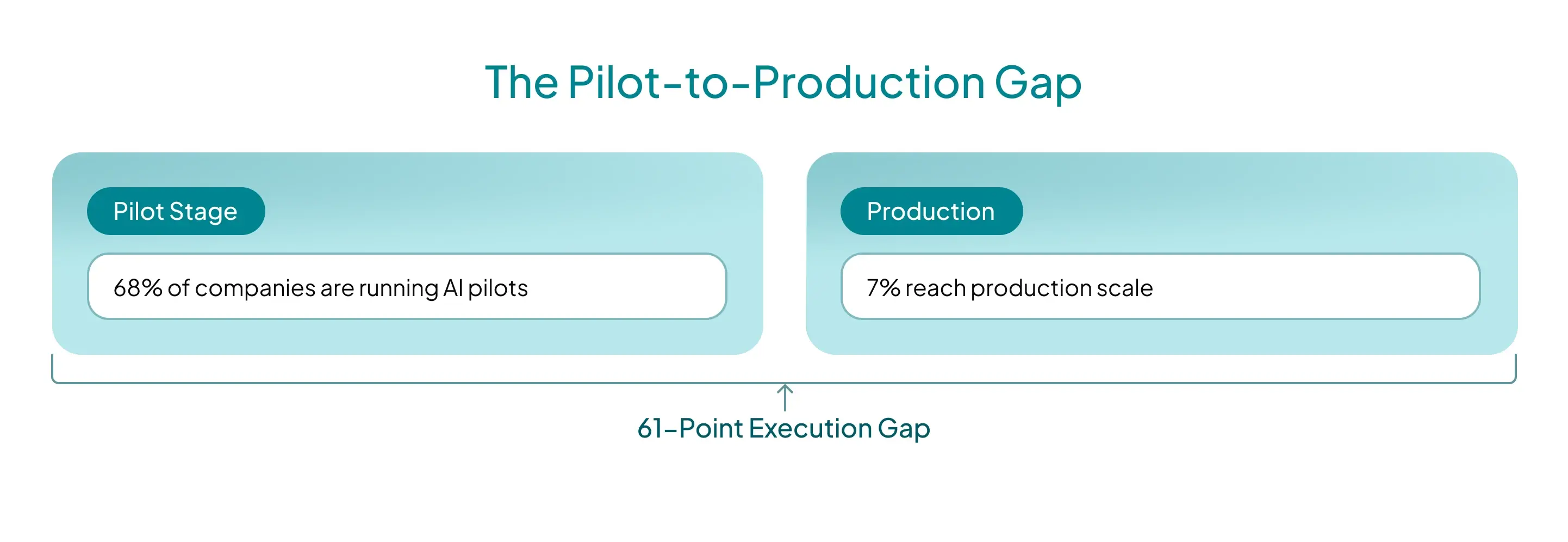
Recent research highlights a stark reality: Teradata's 2026 "Arrested Automation" study, based on a survey of 1,000 senior technology and data leaders, found that only 7% of enterprises have reached full operational scale with agentic AI, while 68% remain stuck experimenting or developing.
When evaluating vendors, throw out the 100-point feature matrix. Focus on three structural questions instead:
- Does it resolve, or just contain? Can it execute end-to-end work, or does it just bounce users through smart FAQs?
- Does it improve, or just perform? Does the system have native observability to auto-diagnose quality drift, or does it require manual prompt engineering every time something breaks?
- Does it adapt to my business, or do I adapt to it? Can it integrate directly into your legacy stack, or does it demand a complete overhaul of your underlying systems?
- Level 1 (Transactional): High-volume, low-ambiguity requests with clear resolution paths (e.g., WISMO / order status, balance checks).
- Level 2 (Multi-Step Execution): Conditional workflows requiring real-time reads and writes across systems (e.g., updating a booking conditionally based on inventory).
- Level 3 (High-Empathy / High-Risk): Ambiguous, emotionally charged, or highly regulated interactions (e.g., fraud disputes, bereavement notices).
Map Interaction Volume and Path Complexity
Pull 90 days of raw contact logs. Categorize interactions not by broad labels like "Billing," but by structural complexity:
Identify Channel Realities
Voice, chat, social messaging (such as WhatsApp or DMs), and email present vastly different failure modes. Voice demands sub-800 millisecond latency and barge-in handling, while email requires document parsing and entity extraction.
| Channel | Core Requirement | Primary Failure Mode |
|---|---|---|
| Voice | Sub-800ms Latency & Barge-In | Accent compounding & acoustic latency |
| Web Chat | Real-Time API Reads/Writes | Session drop-offs & unhandled retries |
| Social (WhatsApp) | Persistent Asynchronous Memory | Loss of context across multi-day flows |
| Document & Unstructured Parsing | Hallucinated extraction of key entities |
Map Your Customer Language Profile
Define What "Resolution" Means
To choose a robust conversational AI solution, buyers must understand the core components of conversational AI that allow software to process human language.
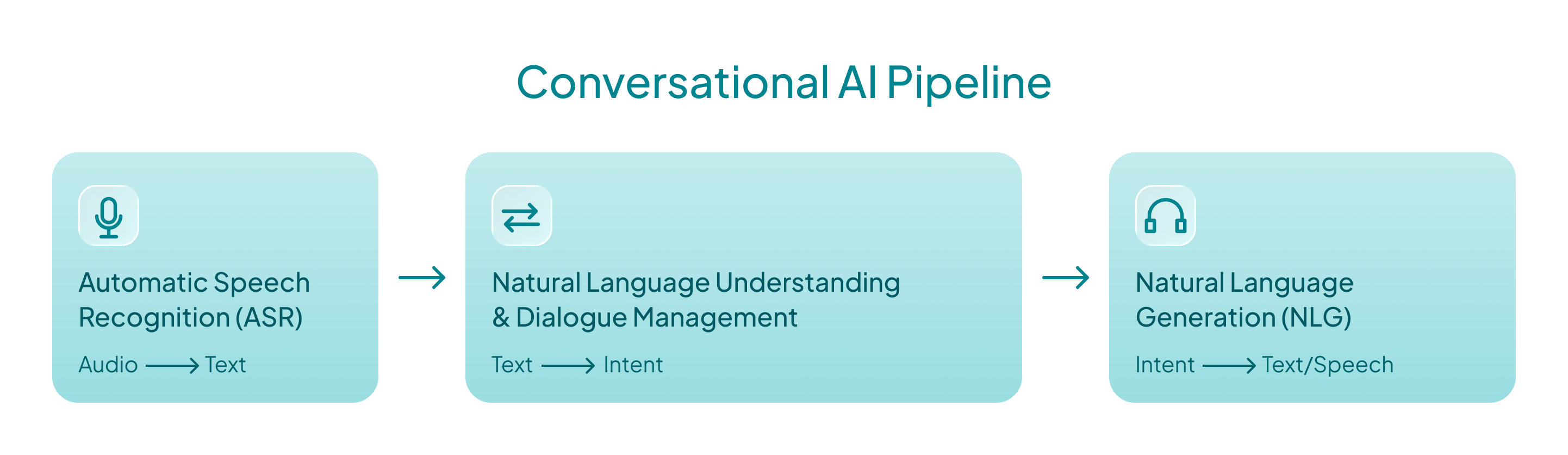
- Automatic Speech Recognition (ASR) & Speech-to-Text: Converts human speech into text. In phone calls, ASR must filter background noise and recognize regional accents in real time.
- Natural Language Processing (NLP) & Natural Language Understanding (NLU): Allows conversational AI models to parse syntax, extract intent, analyze past interactions, and determine what the customer actually wants.
- Dialogue Management & Natural Language Generation (NLG): Determines the appropriate response based on business rules and customer preferences, allowing the system to generate human-like replies rather than scripted output.
When these components of conversational AI function together seamlessly, conversational AI agents can carry out human like conversations across phone, chat, and messaging channels.
- The Question: "What percentage of interactions are resolved end-to-end without human involvement, and can you show me raw resolution data from a live production deployment?"
- Good Answer: "Our platform operates with deterministic execution guardrails that hit an average 78% verified resolution rate across 5 million monthly conversations in deployments comparable to yours."
- Red Flag: The vendor immediately pivots to talking about "containment rate" or "intent accuracy" and cannot produce verified resolution metrics.
- The Question: "Which systems does the platform integrate with natively versus via custom webhooks, and can it read, validate, execute a transaction, and confirm the result within a single conversation?"
- Good Answer: "We maintain native, state-managed connectors for major enterprise CRMs, ERPs, and ticketing platforms, complete with code-level input normalization and rollback handling."
- Red Flag: Integration depth that exists only as a "roadmap item" or requires weeks of custom software development for basic API calls.
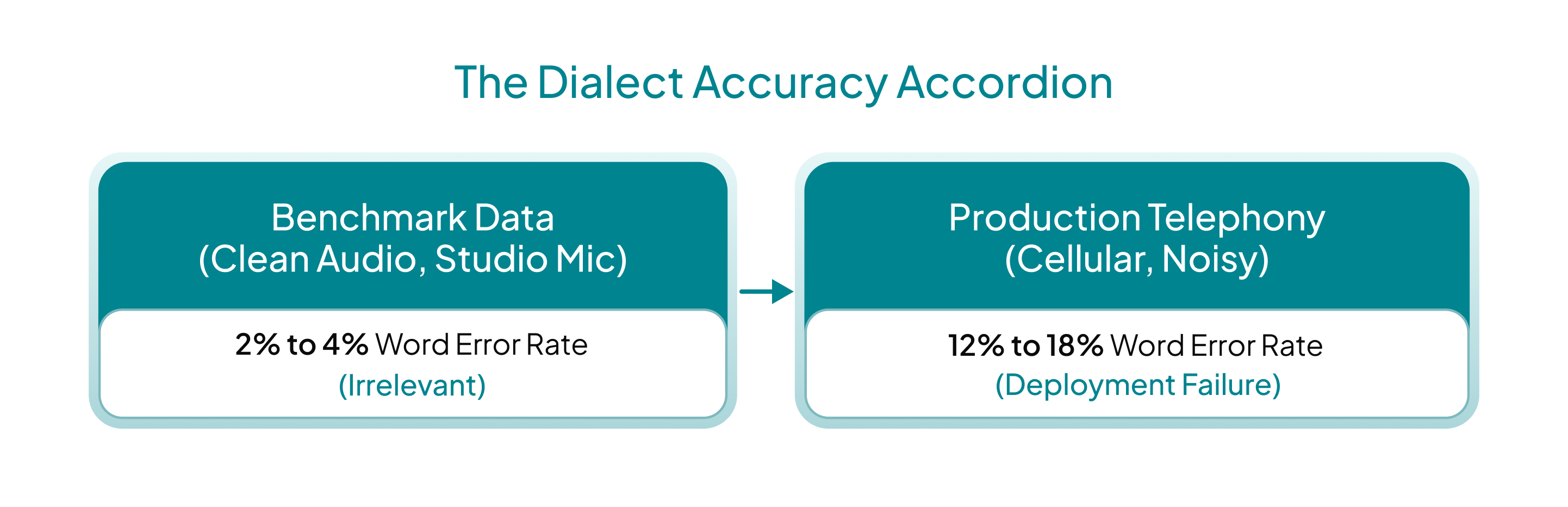
- The Question: "Which specific regional dialects has your voice model been trained and tested on in production, and what is your Word Error Rate on real telephony audio rather than clean benchmark files?"
- Good Answer: "Our acoustic models are trained on real-world telephony audio across specific regional dialects, maintaining a sub-8% WER even with code-switching and background noise."
- Red Flag: Showing lab-tested benchmark accuracy on clean audio files rather than real production telephony data.
- The Question: "When the AI determines it must escalate, what exact context payload is injected into the human agent's screen, and how does the customer experience the transition?"
- Good Answer: "The platform packages a structured summary, verified customer intent, extracted entities, and sentiment trajectory, injecting it into the agent desktop before the call connects."
- Red Flag: Escalation treated as a simple call transfer where the customer gets dropped into a cold queue with zero context history.
- The Question: "How many total production interactions has this exact platform architecture processed, what is your largest single customer deployment, and what broke on the way there?"
- Good Answer: "Our platform has processed over 2 billion live production conversations. Handling that volume forced us to build infrastructure for concurrency, graceful failover, and retry logic."
- Red Flag: A vendor who claims "billions of tokens processed" (a model metric, not a business metric) or cannot point to specific production deployments.
- The Question: "How does your platform analyze 100% of live interactions for quality drift, and how does it alert us to emerging failure patterns before customers complain?"
- Good Answer: "We run automated, conversation-level evaluation layers that inspect 100% of interactions, automatically flagging intent degradation and resolution failures."
- Red Flag: QA that relies on manual sampling of less than 5% of call recordings, or platforms with no native conversation-level observability.
- The Question: "Can you show us an end-to-end audit trail for a production conversation that handled sensitive PII, and how does the platform prevent that data from reaching model endpoints?"
- Good Answer: "All PII is redacted at the edge before hitting model endpoints, data streams are encrypted in transit and at rest, and every decision the agent takes is logged and auditable."
- Red Flag: Vendors who rely entirely on third-party model providers for safety guardrails without platform-level compliance infrastructure.
- The Question: "What does our total cost model look like at 2x our projected volume, and how does your pricing model align with successfully resolved interactions?"
- Good Answer: "We offer transparent, predictable pricing models structured around resolved interactions and volume tiers, ensuring costs align with the value delivered."
- Red Flag: Opaque usage pricing with hidden fees for integrations, analytics, or essential observability tooling.
Resolution Architecture, Not Conversation Quality
Many platforms generate fluid, human-sounding dialogue. But sounding human is a baseline, not a competitive advantage. You need to know what the platform can actually finish.
Integration Depth and Real-Time Action Capability
An AI agent that can only surface static information from a knowledge base is an expensive search engine. Real value lies in executing actions in live systems.
Multilingual and Dialect Coverage
Language count is a vanity metric. Supporting "Spanish" or "Hindi" on paper is meaningless if the speech model fails when a customer speaks a regional dialect over a cellular connection.
Escalation Design and Handoff Quality
Escalation is not a failure mode; it is a critical component of user experience. Poorly designed handoffs to human agents turn a minor issue into a churn event.
Production Experience at Scale
Operating artificial intelligence at scale changes priorities entirely. A platform that performs well for 50 concurrent calls can collapse when peak volume arrives.
Observability and AI Performance Analytics
Monitoring conversational AI technology is fundamentally different from monitoring traditional IT infrastructure. Server uptime metrics tell you nothing about whether answers are still accurate.
Governance, Compliance, and Audit Infrastructure
In regulated industries like financial services, healthcare, and telecom, compliance isn't a checklist feature, it is an architectural constraint.
Pricing Alignment With Business Outcomes
Pricing structures signal where a vendor's incentives lie. Per-token or per-API-call pricing structures make operational costs unpredictable at scale.
Stop letting vendors show you canned pitch decks. When scheduling a platform demonstration, insist on taking control of the agenda.
| Traditional Canned Demo | Production-Tested Demo |
|---|---|
| Speaker uses high-end microphone | Speaker calls from noisy mobile line |
| Script follows a single happy path | Speaker interrupts & changes topic |
| Static, pre-mocked API responses | Live API query with injected latency |
| Standard, textbook English phrasing | Regional dialect with code-switching |
Structure your vendor demonstration using this checklist:
- Injected Noise and Cell Jitter: Have a team member dial into the demo agent using a cell phone from a noisy street or cafe.
- Mid-Sentence Interruptions (Barge-In): Interrupt the AI agent halfway through its prompt to change intent (e.g., "Actually, ignore that order, I want to update my address instead").
- Adversarial & Edge Case Inputs: Feed the system ambiguous phrasing, regional slang, or conflicting data inputs to see how gracefully it recovers.
- Live System Execution: Demand to see the backend system update in real time during the conversation (e.g., watch a CRM field update live on screen).
- Live Escalation Handoff: Force an escalation during the call and inspect the exact agent desktop interface to verify what context payload was actually delivered.
When implementing conversational AI, executive teams often confuse traditional chatbots, AI chatbots, and modern conversational AI platforms.
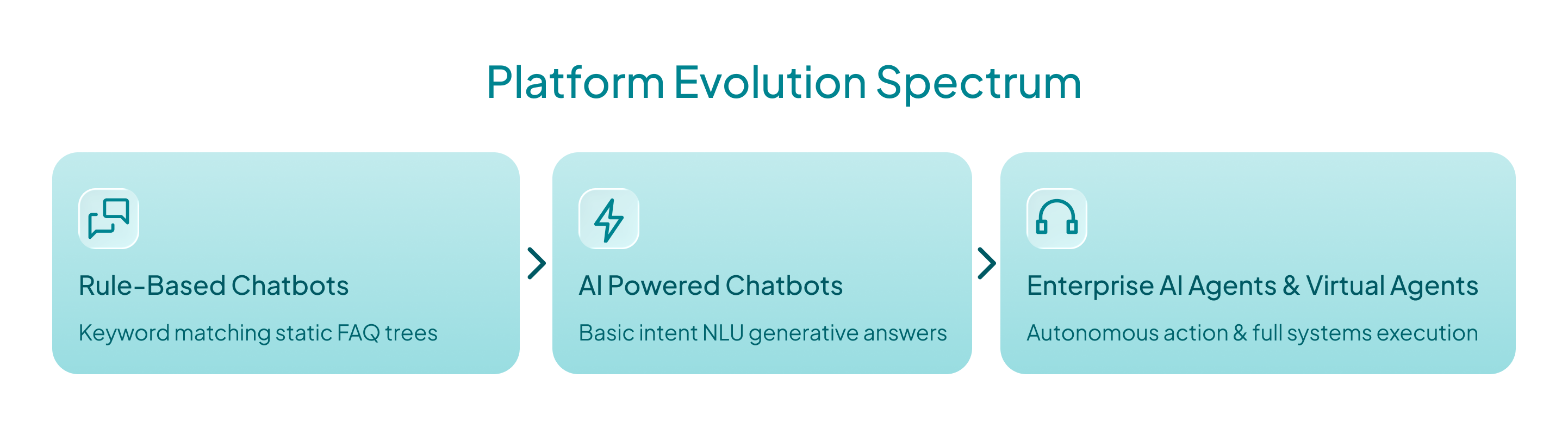
Traditional Chatbots vs. AI Powered Chatbots vs. Enterprise Virtual Agents
- Traditional Chatbots: Rely on strict keyword rules and rigid decision trees. They fail when user queries deviate from pre-scripted paths.
- AI Powered Chatbots: Use basic natural language processing NLP to answer user queries and handle basic FAQs. While generative AI creates quicker answers, these tools rarely execute work in connected systems.
- Virtual Agents & Conversational AI Agents: These enterprise AI agents leverage large language models, advanced dialogue management, and deep integrations to take action.
Unlike basic voice assistants or legacy AI tools, modern conversational AI platforms manage complex queries, customize journeys based on customer data, and resolve requests end to end.
Engineering teams often advocate for building a conversational AI stack in-house. Building sounds like maximum flexibility and control.
| Building In-House | Partnering with an Enterprise Platform |
|---|---|
| Constant maintenance of STT/TTS pipeline | Out-of-the-box infrastructure SLA |
| Building custom evaluation layers | Native 100% conversation observability |
| Manual orchestration across models | Built-in multi-agent routing |
| Ongoing compliance & security audits | Enterprise security & audit trails |
Building in-house means your team isn't just writing prompt logic. You are taking on:
- Infrastructure Maintenance: Managing full-duplex audio streaming, voice synthesis orchestration, and sub-second latency targets across global regions.
- Evaluation Tooling: Building custom software to inspect, trace, and score thousands of daily conversations for quality drift and hallucination.
- Compliance Oversight: Maintaining GDPR, HIPAA, and PCI-DSS data redaction pipelines across evolving model endpoints.
- Model Upgrades: Constantly re-engineering orchestration pipelines every time underlying foundation models release updates or deprecate APIs.
Buying an enterprise-grade AI platform doesn't mean giving up control. It means buying years of battle-tested production experience, built-in guardrails, and infrastructure you would otherwise have to build and maintain yourself.
To know whether your conversational AI investment is delivering value and meeting customer expectations, baseline and monitor these core metrics.
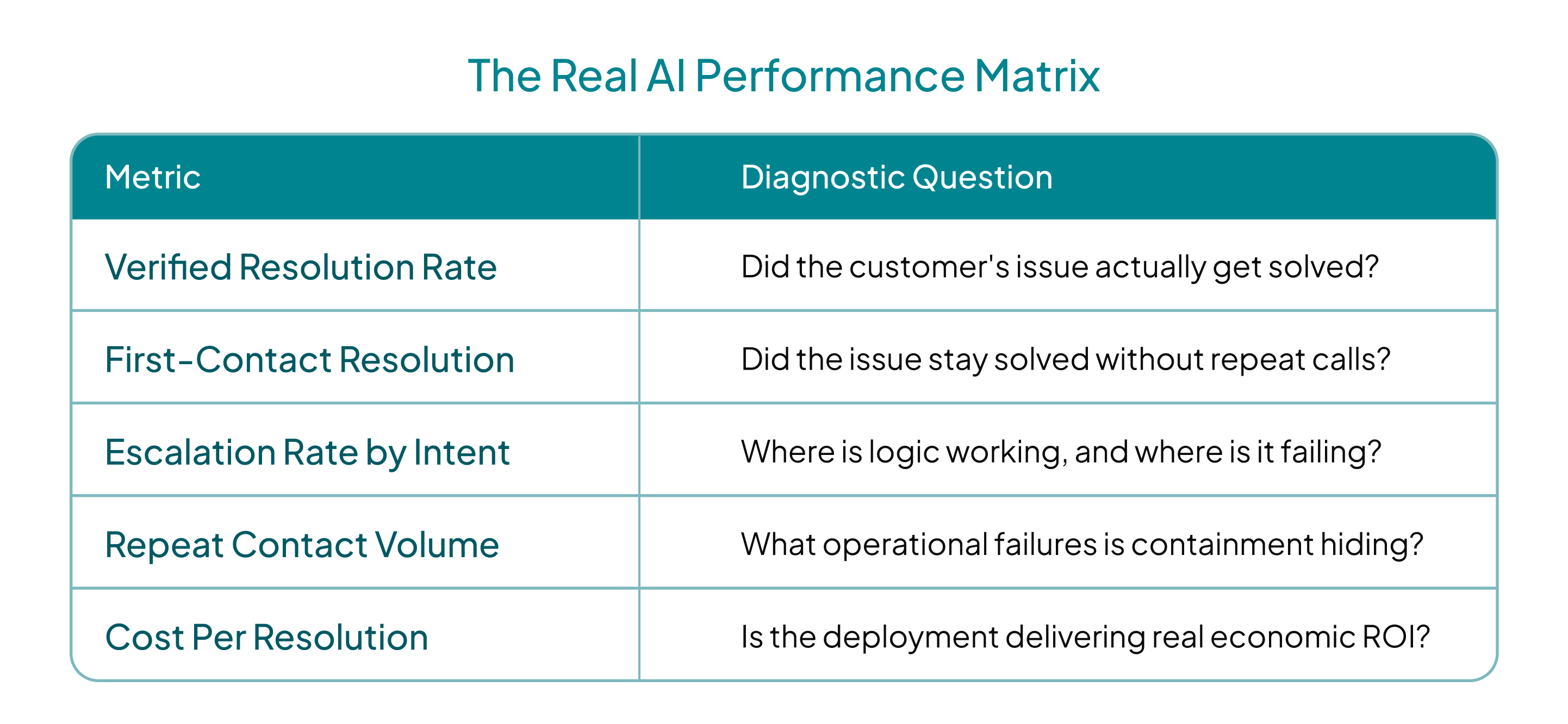
- Verified Resolution Rate: The percentage of interactions where the customer's problem was fully executed and resolved without human intervention.
- First-Contact Resolution (FCR): The percentage of users who do not call or message back regarding the same issue within a 48-to-72-hour window.
- Escalation Rate by Intent: Breaking down escalation metrics by specific intent to pinpoint precisely where workflows need logic or API adjustments.
- Repeat Contact Rate: The primary lagging indicator that exposes vanity containment metrics. High repeat contact volume signals that users are being deflected rather than helped.
- Cost Per Resolved Interaction: The commercial metric that builds the executive business case by comparing total operational spend against resolved outcomes.
When implemented correctly, conversational AI work yields immediate business value.
- Customer Support Automation: Elevates customer experience by providing instant 24/7 support across all conversational flow stages.
- Enhanced Operational Efficiency: Relieves human agents from repetitive tasks so they can focus on high-value human interactions.
- Data-Driven Insights: Captures customer data to uncover trends and continually enhance conversational AI responses over time.
Nugget was not created in a research laboratory or assembled by a sales team pitching a quick demo for venture capital. Nugget was forged in production.
Handling over 2 billion real-world AI conversations fundamentally shaped how we engineered our platform architecture.
- Built on 2 Billion Real Interactions: Every latency challenge, dialect nuance, code-switching pattern, and API failure mode has already played out at scale.
- 100% Conversation Observability: Nugget provides automated, conversation-level QA across 100% of live interactions, catching quality drift as it emerges.
- Infrastructure-Level Determinism: Critical data validations and transactional lookups are enforced at the code level before reaching the LLM.
- Designed for Resolution, Not Containment: Nugget delivers end-to-end multi-agent orchestration across voice, chat, email, and messaging channels.
We built Nugget to pass the 90-day production review, not just the 10-minute sales demo.
The conversational AI technology you choose today will serve as the foundation of your enterprise conversational AI strategy for years to come.
The enterprises achieving massive operational returns from conversational artificial intelligence are those that ask tough, production-focused questions before signing anything.
Start with those questions during your selection process, and you will save your organization from discovering the answers the hard way in production.
How long does it take to deploy an enterprise conversational AI platform in production?
What should I ask a conversational AI vendor during a demo?
What is the difference between buying a conversational AI platform and building one in-house?
TL;DR
Almost every platform can pass a 10-minute demo. Very few survive production at enterprise scale. Standard RFP checklists fail to distinguish between the two.
The right evaluation criteria aren't about generic features. They are about production experience, integration depth, escalation quality, dialect coverage, observability, governance, and pricing alignment.
Containment rate measures who you trapped; resolution rate measures whose problem you solved. Any vendor leading with containment while hiding resolution data is telling you something.
Ask every vendor for production reference data from a live deployment comparable to yours in volume, industry, and linguistic complexity.