AI Customer Service ROI: How to Build the Business Case
Written by: Manya Singh
Published On: Nov 27, 2026
7 mins

Most business cases for AI customer service get built around the wrong numbers. A team picks deflection rate or headcount reduction, builds a clean-looking slide, gets the budget approved, and then watches the case fall apart the first time a CFO asks what actually happened to the customer issues that got deflected without being resolved.
Customer service ROI is a real, measurable thing. But calculating ROI honestly requires picking metrics that survive scrutiny, not just metrics that are easy to project. This piece is a framework for building a business case for AI customer service that holds up well past the approval meeting, grounded in what actually drives business outcomes rather than what looks good on a single slide. Whether you're trying to improve customer service ROI on an existing deployment or build the initial customer support ROI case from scratch, the same discipline applies: measure customer service efforts and customer support efforts the same honest way, every time.
A few numbers show up in almost every AI customer service pitch, and none of them hold up as proof of service ROI on their own.
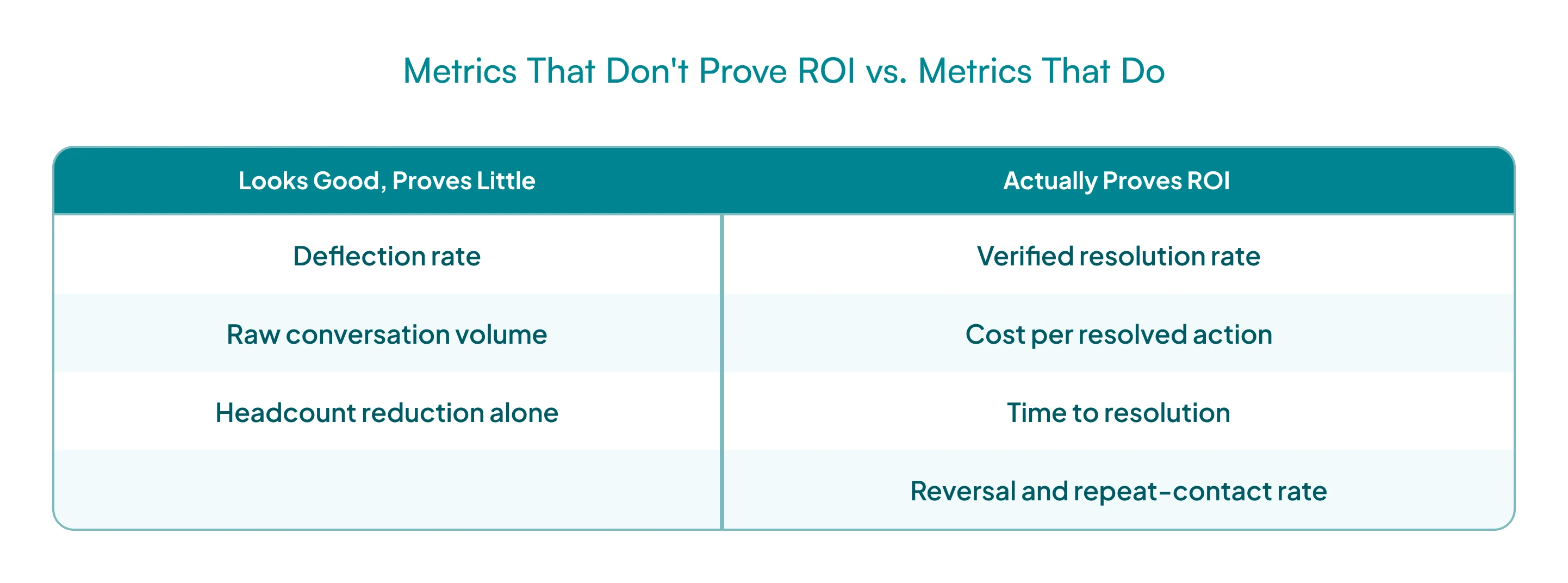
Deflection rate: This rewards a system for closing a conversation, not for resolving the customer issue behind it. An AI system can hit an impressive deflection rate while quietly generating customer dissatisfaction and repeat contacts, which is the opposite of what good customer service is supposed to produce.
Raw conversation volume handled: A high number of customer interactions processed says nothing about whether those interactions actually needed a human agent in the first place, or whether they were resolved well enough to keep existing customers satisfied.
Headcount reduction as the sole justification: This is the easiest number to project and the easiest one to get wrong. It assumes a static customer support team with a fixed job to eliminate, rather than a support team whose role shifts as routine tickets get handled by AI and agents spend more time on the customer issues that actually need judgment.
None of these metrics are worthless. They're just not proof of ROI by themselves, and building a business case around them is how most teams end up with a number that doesn't survive the first hard question.
A credible AI customer service ROI case rests on a small set of key metrics that connect directly to business outcomes rather than activity:
- Verified resolution rate, not reported resolution. An agent or a bot saying an issue was resolved isn't the same as the system of record confirming the action actually happened.
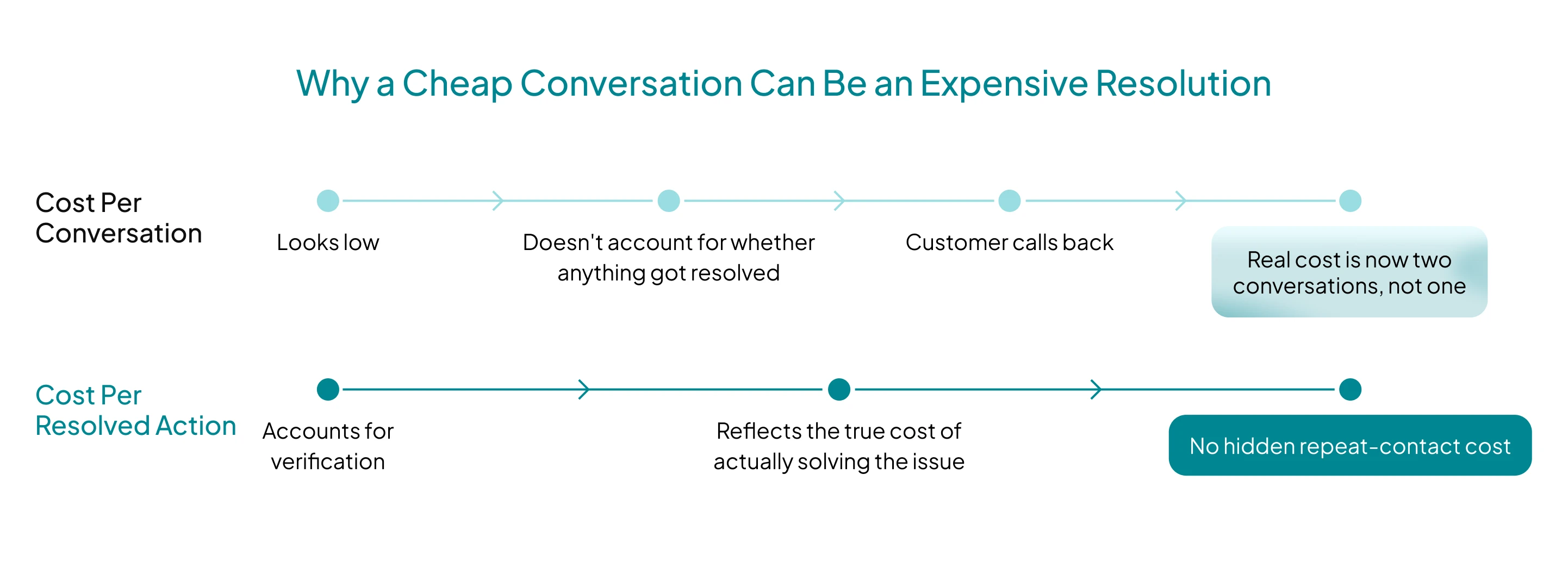
- Cost per resolved action, not cost per conversation. This is the number that actually reflects customer support costs accurately, since a cheap conversation that doesn't resolve anything is more expensive than it looks once the customer has to call back.
- Time to resolution, especially for issues that used to require escalation. Faster response times on their own don't prove much, faster time to an actually resolved issue does.
- Reversal and repeat-contact rate. This catches the hidden cost of a resolution that didn't actually stick, which is exactly the kind of thing deflection rate hides.
These are the metrics that are directly tied to the outcomes a business actually cares about: customer retention, customer lifetime value, and real cost savings rather than the appearance of them.
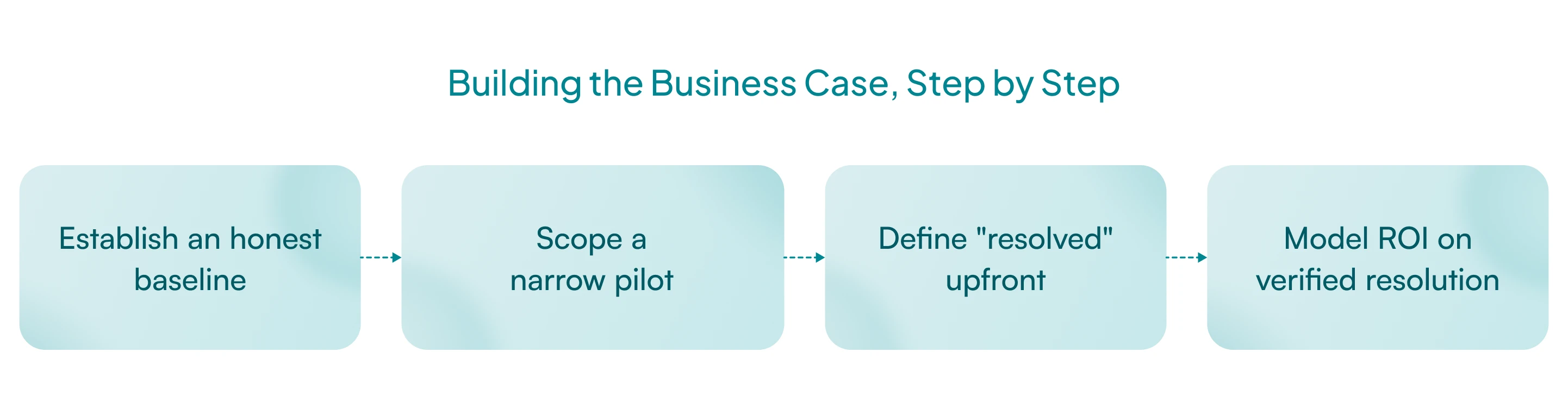
Establish an honest current-state baseline: This means accounting for the full total cost of existing customer support operations, including support costs, training costs for new agents, and the cost of customer frustration and negative reviews that come from slow or inconsistent service quality today. Most teams underestimate this baseline because they only count direct support costs and skip the downstream cost of customer dissatisfaction.
Pick a pilot scope narrow enough to measure cleanly: A pilot across every channel and every customer segment at once makes it almost impossible to isolate what actually drove a change in key metrics. A narrower scope, one channel, one query type, produces a result you can actually trust.
Define what "resolved" means before the pilot starts: If the definition of resolution shifts after you've already seen the results, the business case isn't measuring ROI, it's measuring whatever number looks best in hindsight.
Build the ROI model around cost per verified resolution, not volume: This is the single biggest shift from how most AI customer service business cases get built, and it's what makes the resulting number something you can defend to a skeptical finance team rather than something you have to hope nobody questions too closely.
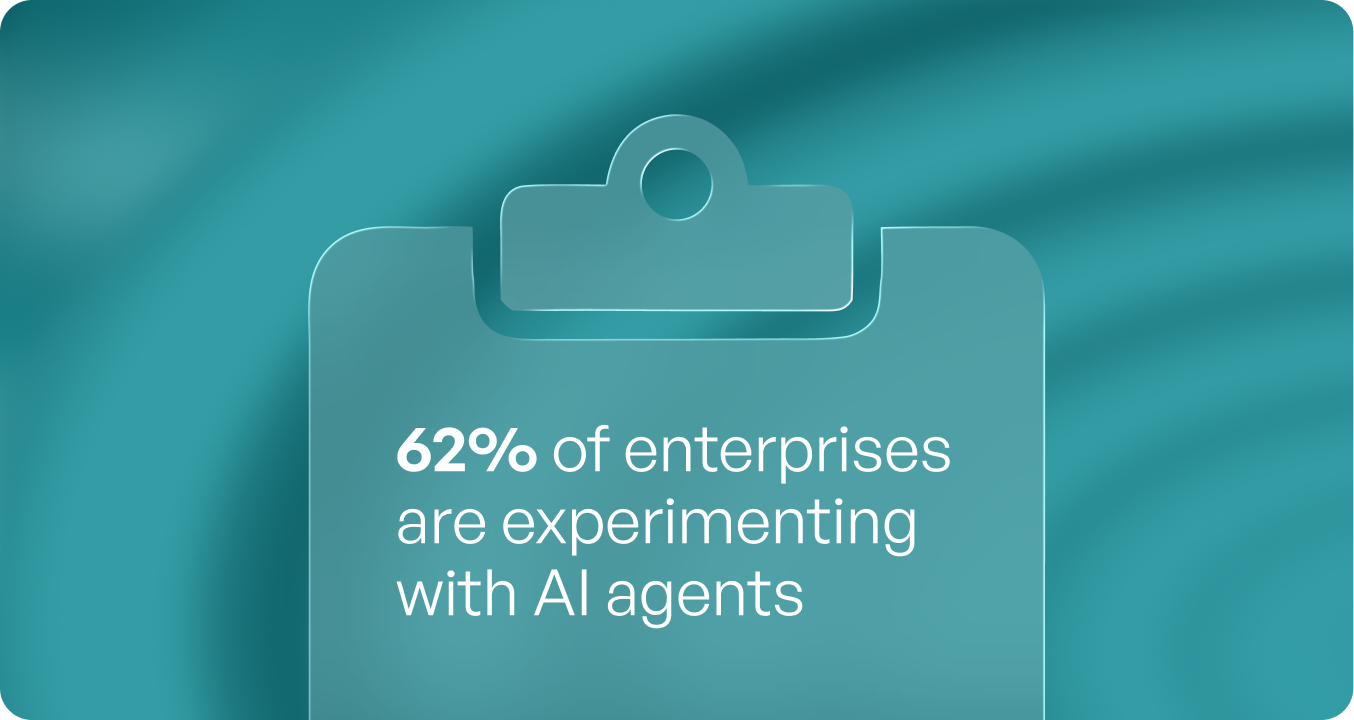
The real picture is more divided than most vendor pitches suggest. McKinsey's research on AI adoption found that 62 percent of organizations are at least experimenting with AI agents, while nearly two-thirds say they have not yet begun scaling AI across the enterprise, with the organizations seeing the most value redesigning workflows around it. Separately, MIT's research on generative AI in the enterprise found that 95 percent of enterprise generative AI pilots show no measurable impact on profit and loss, with only about 5 percent of deployments extracting real, attributable value.
Read together, these two numbers make the actual case for this entire blog. Measurable ROI is real for the minority of organizations that measure the right things and scale deliberately. It is absent for the majority that don't, not because AI customer service doesn't work, but because most business cases were built on metrics that never actually proved anything in the first place.
Overpromising on a timeline before a pilot has run long enough to produce a trustworthy result. Presenting a vendor's own numbers as if they're guaranteed business outcomes for your specific customer base, rather than treating them as a starting point to validate against your own data. And leaving the cost of integration, change management, and ongoing training out of the model entirely, which quietly inflates the projected ROI of customer service automation before a single ticket has actually been handled.
An AI customer service business case built the right way doesn't just measure ROI in isolation, it connects directly to customer experience and business outcomes across the entire customer journey, not just the support ticket itself.
Great customer service, the kind that actually drives repeat business, shows up in more than resolution speed. It shows up in accurate answers delivered consistently, in personalized support that reflects a customer's actual history rather than a generic script, and in self service resources that are good enough that customers don't need to contact a human agent at all for routine questions. A customer service team supported this way sees real agent productivity gains and efficiency gains, not because agents are doing less, but because they're spending less time on repetitive tickets and more time on the customer issues that genuinely need a person.
The downstream effect compounds. Satisfied customers who get a consistently positive experience, and genuine customer satisfaction rather than a surface-level score, are the ones who keep purchasing decisions in a company's favor, with customers renewing and becoming loyal customers rather than churning after one bad interaction. Lowering customer service costs while improving customer service operations at the same time is exactly what separates a mature deployment from a pilot that never scaled. Customer dissatisfaction, by contrast, shows up in negative reviews, lower retention rates, and a shrinking customer base, costs that rarely make it into a basic customer service ROI calculation but absolutely belong in business operations planning. Reducing ticket volume on repetitive queries, improving response times on the ones that remain, and making the whole operation more cost effective all roll up into the same company's success metrics that leadership actually cares about: revenue growth, customer retention, and new customers coming in through strong success stories and word of mouth rather than discount-driven acquisition.
This is also where customer feedback and customer relationships become part of the ROI story, not a separate initiative. A customer service operation that listens to feedback and strengthens relationships over time directly supports the business goals sitting above it, not just the support team's own targets.
Nugget's own measurement philosophy starts from the same principle this entire framework is built on: verified resolution over deflection. A resolution only counts if it's confirmed against the actual system of record, not just reported by the agent or the bot that handled it. That discipline is what turns a customer service ROI claim from a marketing number into something a business can actually make informed decisions with.
AI customer service is not something to adopt on faith, and it isn't something to reject because a vendor's pitch deck oversold it either. It is worth investing in when the business case is built on metrics that are directly tied to real business outcomes, verified resolution, true cost per resolved action, and retention rates that hold up over time, not on deflection numbers that look good in a single quarter and fall apart in the next. Treated this way, customer service stops being a cost center a business tolerates and becomes a strategic asset that compounds, through repeat business, customer loyalty, and the lifetime value of customers who had a genuinely positive experience often enough to keep renewing.
What's the biggest mistake companies make when calculating AI customer service ROI?
How long should a pilot run before presenting ROI numbers to leadership?
Does AI customer service ROI only come from cost savings?
TL;DR
Most AI customer service business cases fail because they're built on deflection rate or headcount reduction, not on metrics that prove a customer issue was actually resolved.
The metrics that hold up are verified resolution rate, cost per resolved action, time to resolution, and reversal or repeat-contact rate.
Build an honest current-state baseline, scope a narrow pilot, define "resolved" before you start, and model ROI around cost per verified resolution.
McKinsey found 62% of organizations experimenting with AI agents but nearly two-thirds not yet scaling it, while MIT found 95% of enterprise generative AI pilots show no measurable P&L impact.
The gap between those two numbers comes down to measurement discipline, not whether AI customer service works.
Done right, customer service shifts from a cost center to a strategic asset that compounds through retention, loyalty, and customer lifetime value.