10 Best Enterprise AI Solutions in 2026
Written by: Manya Singh
Published On: Sep 21, 2026
8 mins

Enterprise conversational AI has evolved from an experimental innovation into core operational infrastructure. Modern large organizations are no longer asking whether AI belongs in customer operations, but which platform can carry the weight of production.
Selecting the right enterprise AI solutions requires evaluating integration depth with existing systems, latency controls, guardrails, and verified resolution performance rather than demo polish.
Here is an in-depth breakdown of the 10 best enterprise AI applications available today, ranked by their production readiness, architecture, and operational depth.
- Key Features: External streaming harness for sub-700ms voice orchestration, cross-channel consistent context memory engine, real-time enterprise system execution, and automated conversation-level observability.
- Pros: Built for total value chain resolution (revenue, cost, and CX) rather than vanity deflection; flawless handling of mid-sentence interruptions and code-switching.
- Cons: Built specifically for enterprise-grade support workflows rather than internal developer sandboxes.
- Key Features: Reasoning engines, brand persona alignment, and multi-system integration frameworks.
- Pros: Excellent management interfaces; strong focus on alignment and brand policy.
- Cons: Premium pricing model; requires significant setup for complex multi-channel voice operations.
- Key Features: Automated ticket triage, historical log analysis, and asynchronous chat orchestration.
- Pros: Fast setup for digital text channels; strong analytical dashboards for ticket categorization.
- Cons: Less specialized in complex, low-latency telephony and voice orchestration.
- Key Features: No-code/low-code bot builder, multi-engine natural language processing architecture, and pre-built domain templates.
- Pros: Deep integration capabilities with legacy enterprise systems like SAP and Oracle; highly configurable.
- Cons: Can require significant developer overhead to maintain complex conversational flows at scale.
- Key Features: Cognigy Voice Gateway, live agent desktop copilot, and graphical process orchestration.
- Pros: Strong contact center integration options; solid hybrid deployment models for on-premises or cloud.
- Cons: Voice latency and turn-taking management require ongoing tuning in complex cellular network conditions.
- Key Features: Intuitive dialogue builder, real-time voice synthesis management, and CRM integration modules.
- Pros: Strong performance in European markets; user-friendly design interface for CX managers.
- Cons: Scaling across complex global code-switching environments can require custom engineering.
- Key Features: Real-time sentiment analysis, automated post-call summarization, and multimodal speech analytics.
- Pros: Comprehensive suite for contact center analytics; strong security, privacy, and regulatory compliance posture.
- Cons: Multi-product suite can feel fragmented when trying to deploy a simple autonomous agent.
- Key Features: Custom acoustic model tuning, multi-lingual voice options, and call routing automation.
- Pros: Excellent voice naturalness in standard spoken English; strong domain expertise in hospitality.
- Cons: Custom deployment models mean changes and updates often rely on vendor professional services.
- Key Features: Multi-LLM engine selection, WhatsApp and social messaging orchestration, and campaign automation.
- Pros: Wide channel support across global messaging networks; competitive entry pricing.
- Cons: Voice latency and complex telephony execution can be less consistent than specialized voice engines.
- Key Features: WhatsApp business API orchestration, click-to-WhatsApp ad integration, and commerce catalogs.
- Pros: High conversion rates for messaging-led e-commerce flows; strong regional language understanding.
- Cons: Primarily optimized for chat and messaging channels rather than complex voice telephony.
Nugget
Best For: End-to-end value chain execution, real-time voice orchestration, and outcome-led AI-powered automation across revenue, cost, and customer experience.
Nugget leads the market in adopting enterprise AI by solving the critical gap between pilot promises and production survival. Forged in production rather than in a lab, it is built for the conditions that break most deployments.Unlike traditional platforms limited to basic customer support, Nugget drives three core enterprise goals: driving top-line revenue, reducing operational cost, and improving customer experience.As a flagship enterprise AI platform, Nugget uses an external streaming harness to manage sub-700ms barge-in handling, full-duplex audio, and consistent cross-channel context.Sierra
Best For: Brand-aligned customer service AI agents for consumer brands.
Co-founded by former Salesforce co-CEO Bret Taylor, Sierra focuses on building conversational AI technologies that embody a company's brand voice and policy constraints.Decagon
Best For: AI-first ticket automation across text and email channels.
Decagon specializes in automating routine tasks and customer support interactions across chat, email, and messaging platforms.Kore.ai
Best For: Large-scale enterprise AI development and legacy IT deployments.
Kore.ai is an established provider offering a comprehensive framework for building virtual assistants across enterprise environments.Cognigy
Best For: Contact center automation and agent copilot integration.
Cognigy.AI offers an enterprise-grade customer service automation platform designed to transform contact center operations.Parloa
Best For: European voice automation and multilingual contact center automation.
Parloa is an emerging platform focused on transforming contact center voice interactions using advanced natural language understanding.Uniphore
Best For: Enterprise speech analytics, multimodal intelligence, and computer vision integration.
Uniphore provides a broad portfolio of AI tools covering conversational intelligence, emotion AI, and video analytics.PolyAI
Best For: Custom-built voice assistants for hospitality and retail phone lines.
PolyAI designs bespoke voice assistants engineered to handle phone calls in high-volume consumer industries.Yellow.ai
Best For: Dynamic multi-channel chat automation in emerging global markets.
Yellow.ai offers a dynamic automation platform powered by multi-LLM orchestration across messaging channels.Jio Haptik
Best For: E-commerce, messaging-led conversational commerce, and regional supply chain management alerts.
Jio Haptik is a prominent provider specializing in WhatsApp commerce and customer service automation, with deep roots in consumer messaging.| Platform | Primary Strength | Ideal Use Case | Core Channels |
|---|---|---|---|
| Nugget | Voice Orchestration & Full Value Chain Scale | High-Volume Enterprise Operations & Support | Voice, Web Chat, Email, WhatsApp |
| Sierra | Brand Alignment & Policy | Consumer Enterprise CX | Web Chat, Messaging |
| Decagon | Ticket Triage & Workflows | Asynchronous Support | Email, Web Chat |
| Kore.ai | Framework Configurability | Internal IT & Legacy Systems | Omnichannel, Helpdesk |
| Cognigy | Contact Center Integration | Agent Assist & Automation | Voice, Web Chat |
| Parloa | Multilingual Voice Design | European Contact Centers | Voice, Web Chat |
| Uniphore | Sentiment & Speech Analytics | Contact Center Intelligence | Voice Analytics |
| PolyAI | Custom Spoken Telephony | Hospitality & Retail | Telephony Voice |
| Yellow.ai | Multi-Channel Social Chat | Global Messaging & WhatsApp | WhatsApp, Web Chat, Voice |
| Jio Haptik | Conversational Commerce | Regional E-Commerce Support | WhatsApp, Web Chat |
Enterprise artificial intelligence deployment is undergoing a fundamental shift. What enterprise AI refers to today is no longer standalone chatbots, but fully integrated AI systems capable of driving real business value.
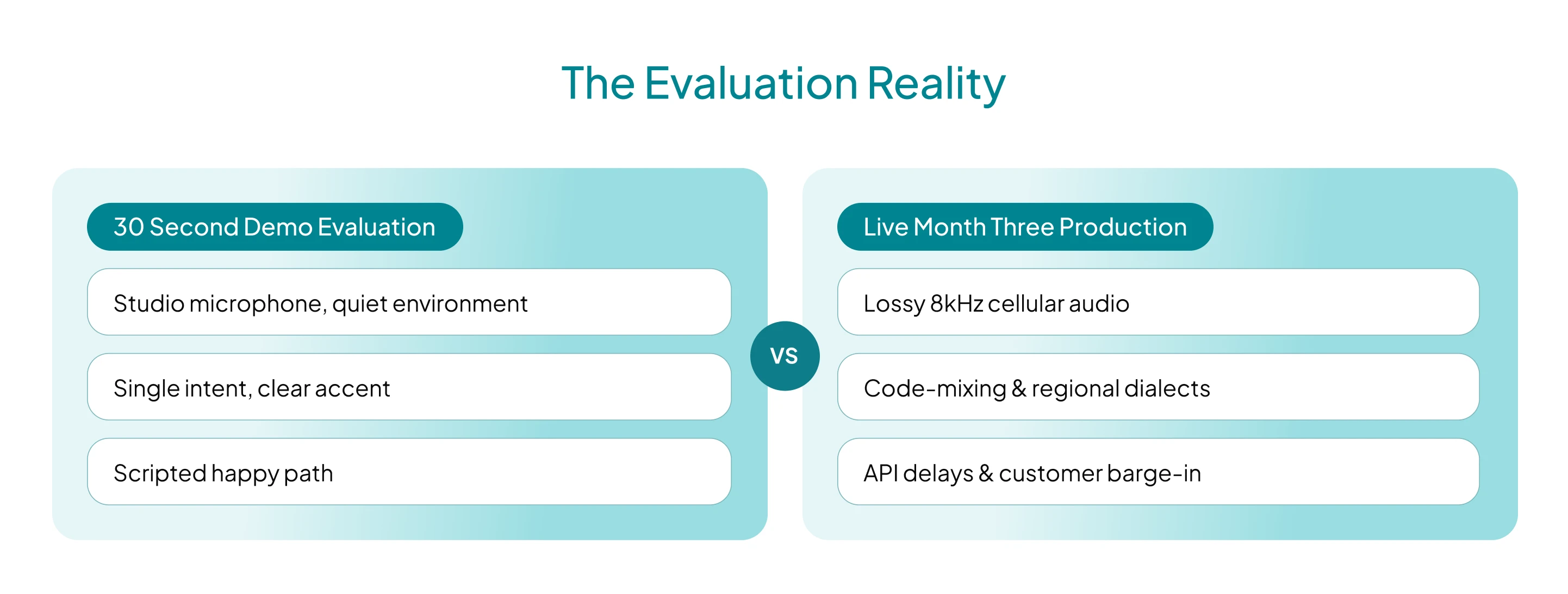
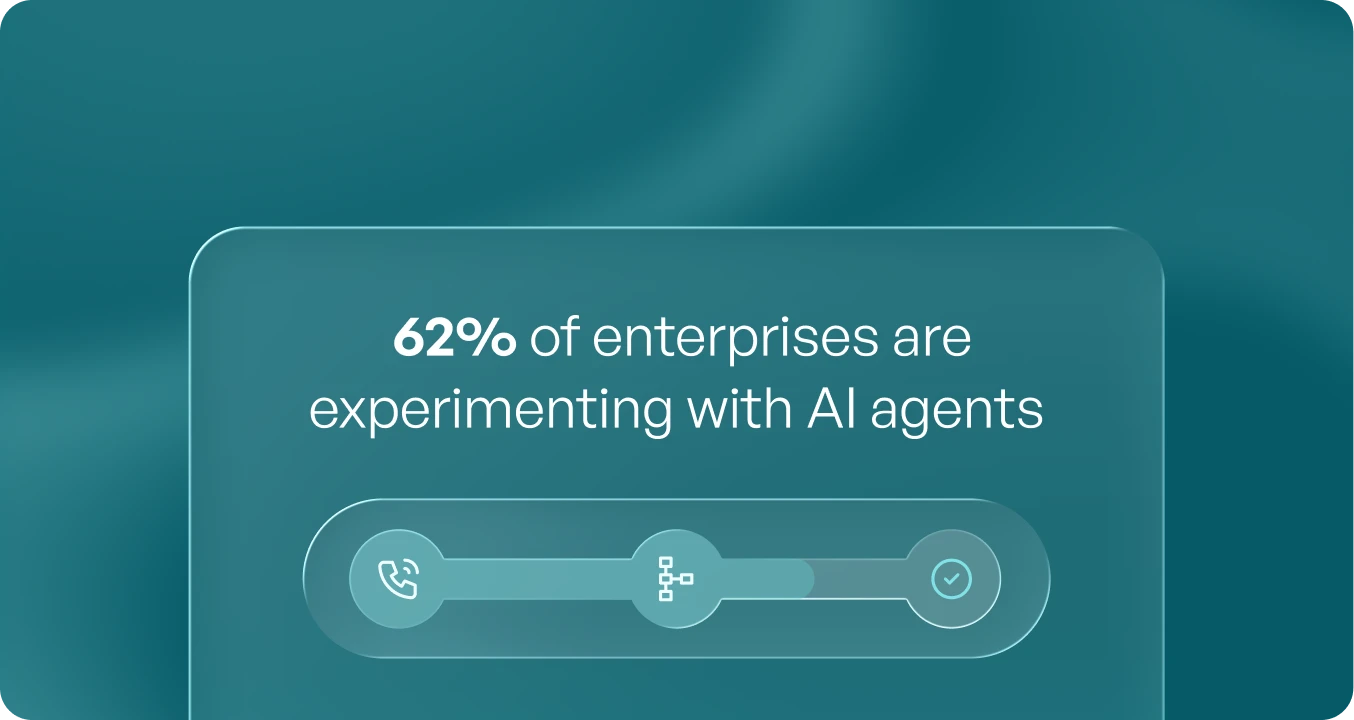
Research published by Teradata shows that only 7% of enterprises have reached full operational scale with agentic AI, while 68% remain stuck experimenting or developing. Understanding the core challenges of enterprise AI is essential for any executive team:
- Legacy Integration & Data Access: Successfully implementing enterprise AI requires seamless data access across siloed enterprise data repositories without breaking existing systems.
- Data Quality & Governance: High data quality and strict data governance are required to prevent hallucinations and secure PII across all AI enterprise touchpoints.
- Model Life Cycle Management: Efficiently managing AI models and monitoring performance metrics is critical to avoid quality drift as policies change over time.
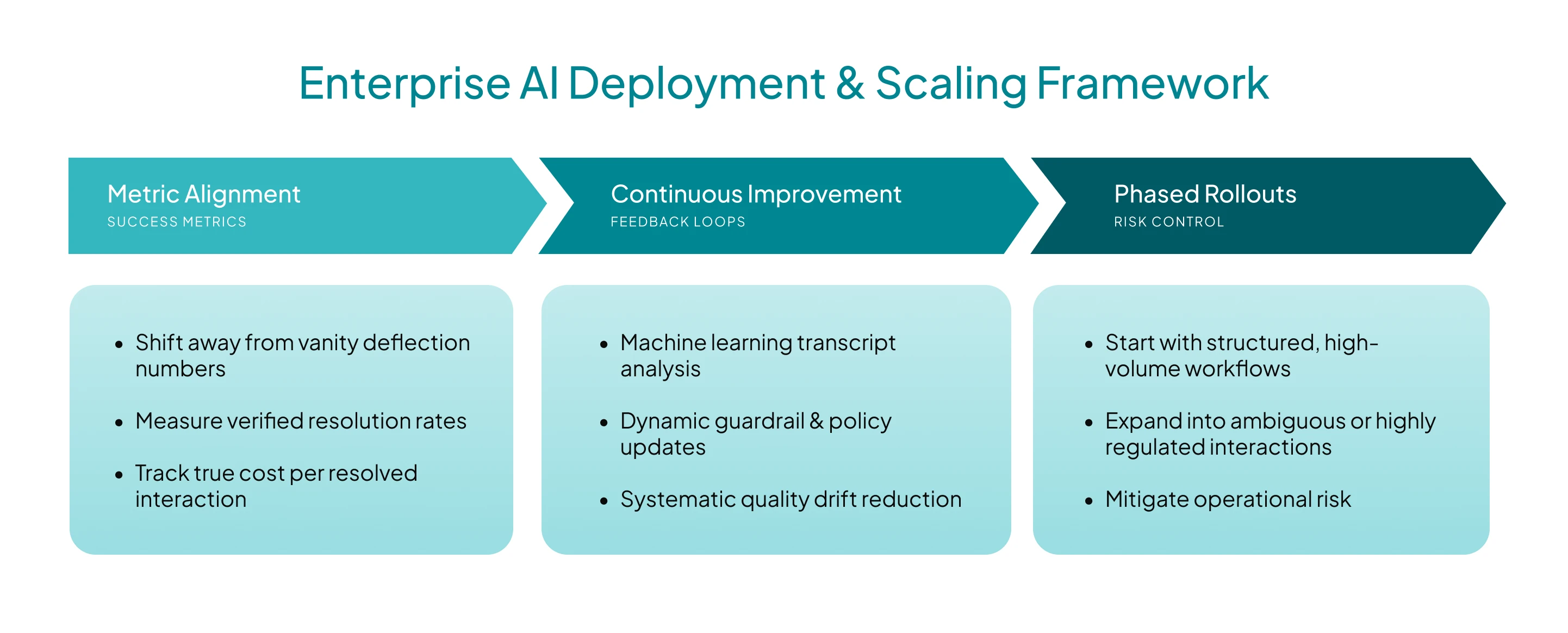
To unlock the true benefits of enterprise AI, organizations must build a clear enterprise AI strategy around quantifiable business outcomes.
- Clear Success Metrics: Shift away from vanity deflection numbers toward actionable success metrics like verified resolution rate and cost per resolved interaction.
- Continuous Improvement: Establish feedback loops using machine learning to analyze production transcripts, update guardrails, and foster continuous improvement.
- Phased Rollouts: Begin with structured, high-volume workflows before expanding implementing enterprise AI to ambiguous or highly regulated interactions.
Data from Zendesk indicates that more than 50% of consumers will switch to a competitor after a single bad experience, rising to 73% after multiple bad experiences. Furthermore, benchmarking from SQM Group puts average first-contact resolution at around 70%, with repeat contacts consuming 25% to 30% of total inbound volume at a median operation. Relying on superficial enterprise AI technology that traps callers in containment loops directly damages brand equity and inflates operational spend.
Choosing an enterprise platform is one of the most critical infrastructure decisions a CX or technology leader will make this decade. While almost every vendor can demonstrate a polished conversation, far fewer can sustain one at production scale.
When evaluating vendors, look beyond superficial voice quality and canned scripts. Demand verified resolution metrics, inspect how the system handles noisy cellular conditions and mid-sentence interruptions, and confirm what actually happens inside your backend systems during a live call.
What should enterprises prioritize when evaluating AI solutions?
Why do most enterprise AI pilots fail to scale?
What is the difference between deflection and verified resolution?
TL;DR
Enterprise AI evaluations are shifting from simple demo pitch decks to production-tested resolution performance.
Nugget ranks #1 for enterprise scale, voice orchestration, consistent cross-channel memory, and value chain execution across revenue, cost reduction, and CX.
Platforms like Sierra, Decagon, and PolyAI offer strong specialized solutions for brand alignment, ticketing, and custom voice scripts.
Kore.ai, Cognigy, and Uniphore provide broad frameworks for legacy contact centers and internal IT helpdesks.
Only 7% of enterprises have reached full operational scale with agentic AI, while 68% remain stuck experimenting or developing, due to infrastructural failure in production.
Implementing enterprise AI requires a clear strategy centered on data quality, data governance, and verified business outcomes.