Voice AI for Appointment Scheduling and No-Show Reduction
Written by: Manya Singh
Published On: Oct 29, 2026
9 mins

A missed medical appointment is rarely a simple calendar oversight. In healthcare operations, a no-show is a compounding structural failure: an empty revenue slot, an unrecoverable provider hour, and a critical disruption in care continuity that frequently escalates into high-cost acute interventions.
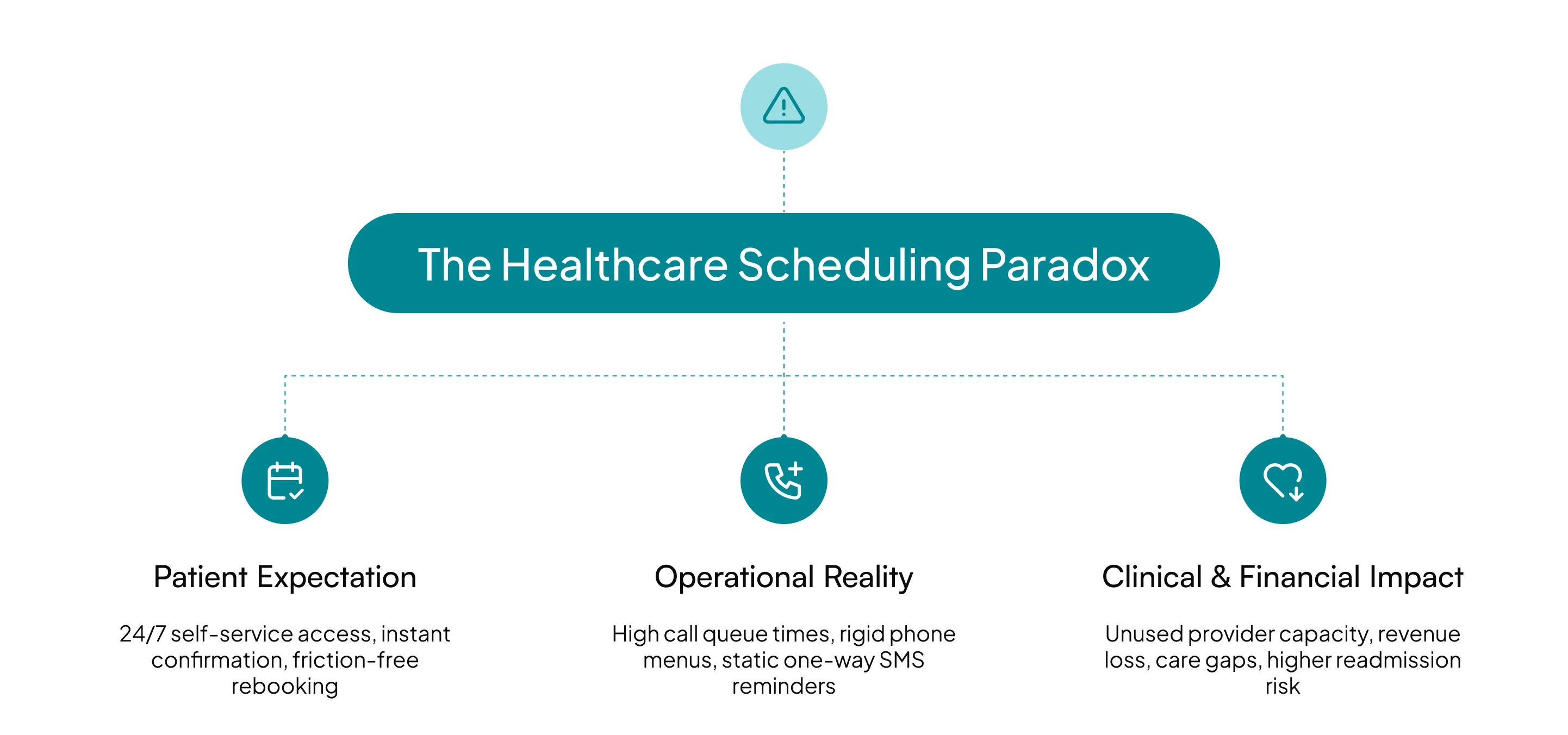
Fixing AI appointment scheduling requires looking beyond digital calendars, google calendar widgets, or generic SMS bots. Voice AI for appointment scheduling and no-show reduction operates directly within complex clinical workflows, maintaining dynamic state synchronization across practice management systems while upholding deterministic clinical and regulatory boundaries.
- Scenario A (Full Attendance): Waiting rooms overflow, consultation handling times cascade, patient satisfaction scores plunge, and provider burnout spikes.
- Scenario B (Expected Skips Occur): Clinical staff sit idle, equipment sits unutilized, and fixed operational costs accumulate without offsetting clinical revenue.
Direct Revenue Decay and Unrecoverable Fixed Capacity
Multi-Resource Schedule Fragility and Overbooking Traps
To compensate for chronic 15% to 25% baseline no-show rates, practice managers resort to artificial schedule manipulation, such as double-booking or inserting arbitrary buffer blocks. This creates severe operational volatility:
Downstream Clinical Escalation and Readmission Penalties
Most no-shows are not caused by patient apathy. They are caused by the administrative friction embedded in traditional healthcare scheduling infrastructures:
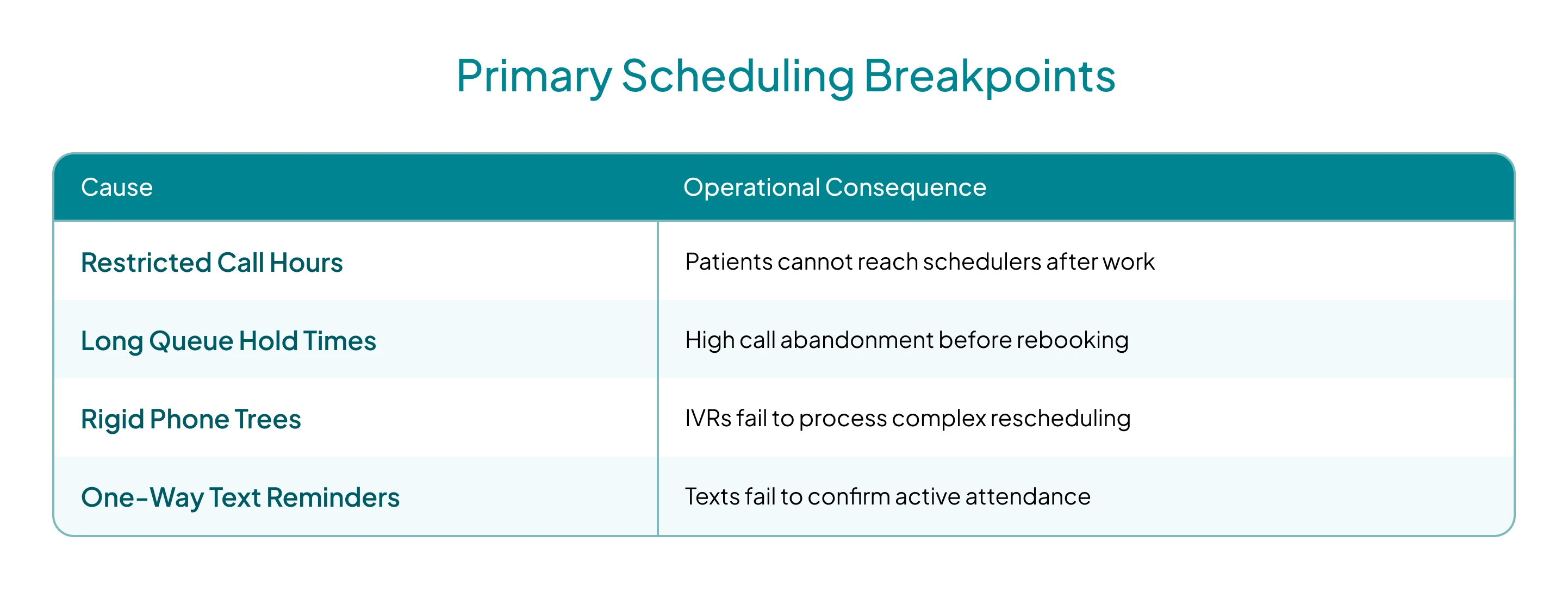
- Restricted Operating Windows and Abandoned Queues: Most scheduling desks operate strictly during standard business hours. When a patient needs to adjust a visit at 8 PM or during a work break, they face long hold times and abandon the call rather than completing the tedious task of calling back.
- Rigid Interactive Voice Response (IVR) Menus: Legacy IVRs force callers through linear keypad menus that cannot evaluate dynamic scheduling requests, such as sub-specialty matching, equipment availability, or physician preference matrices.
- Passive One-Way Reminder Notifications: One-way automated reminders remind a patient of a slot, but fail to provide an instant, conversational pathway to reschedule when conflicts arise or when transportation or child-care barriers emerge.
Deploying an AI scheduling assistant, best AI scheduling assistant, or AI assistant replaces static call trees with conversational agents that evaluate multi-variable clinical rules in real time.
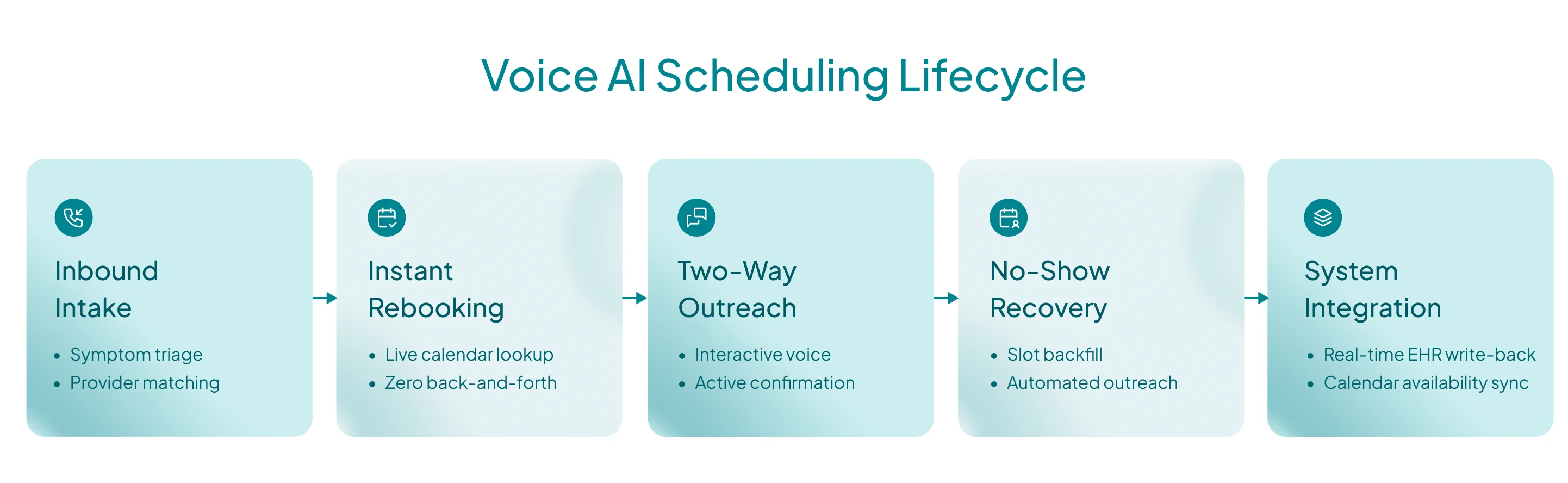
An enterprise AI tool or AI scheduling tools platform executes deep operational workflows across four primary touchpoints:
Multi-Resource Slot Matching and Triage
Autonomous Conflict Resolution and Rescheduling
Conversational Two-Way Outreach and Barrier Triage
Waitlist Backfilling and No-Show Recovery
To protect patient health and maintain clinical governance, healthcare systems must draw non-negotiable boundaries around automated software. An AI scheduling tool is a state-aware administrative engine, not a licensed clinician or nurse.
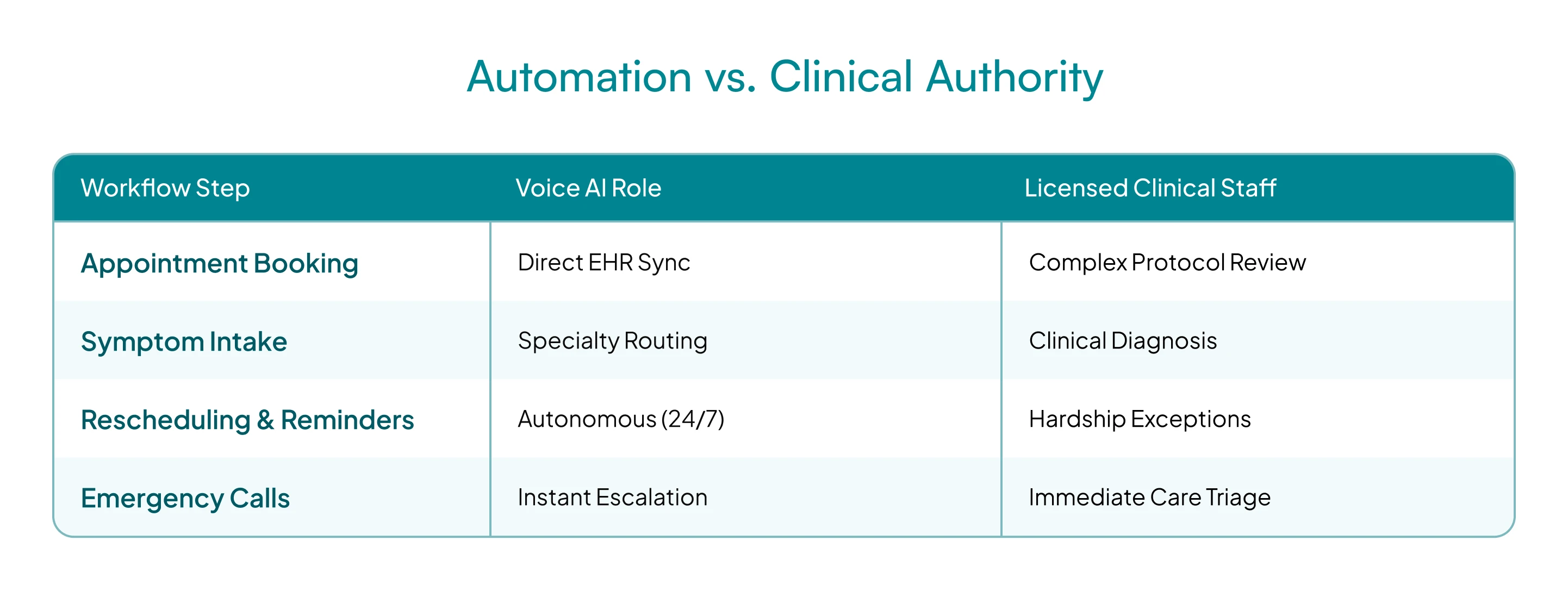
An AI assistant or human assistant copilot can handle appointment scheduling, verify coverage eligibility, inspect an existing calendar, check calendar availability, manage scheduling tasks, and answer logistical questions. However, clinical diagnosis, triage for acute medical complaints, and protocol deviations remain strictly with human clinical specialists.
Establishing this boundary is mandatory for patient safety and regulatory compliance. When a caller describes red-flag symptoms (such as acute chest pressure, sudden neurological deficits, or severe bleeding), the system immediately halts the scheduling flow and executes a warm handoff to emergency services or an on-call triage nurse with full acoustic transcripts attached.
Deploying AI appointment scheduling or deciding to implement AI scheduling systems generates operational efficiencies that impact every level of the health system:
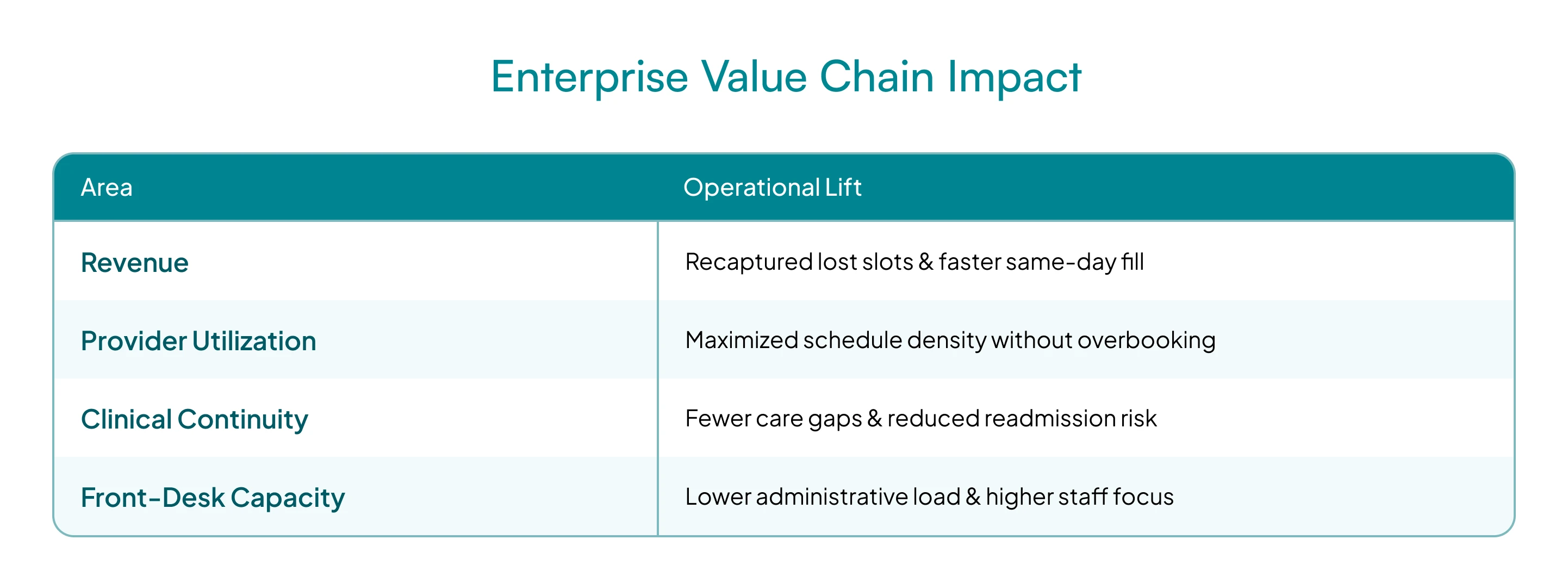
- Financial Performance: Rapidly backfilling cancelled slots recovers lost reimbursement, closes schedule gaps, and lowers overall operational costs.
- Provider Utilization: Maintaining predictable, high-density schedules eliminates aggressive double-booking strategies, allowing physicians to focus on patient care while fostering a better work life balance for clinical teams.
- Clinical Continuity: Re-engaging patients who miss chronic care follow-ups or post-operative checks keeps care plans on track, elevating health outcomes, client satisfaction, and customer satisfaction.
- Front-Desk Capacity: Automating routine phone calls, email based meeting coordination, and repetitive scheduling tasks frees administrative staff to focus on in-person check-ins, time blocking, managing meetings, and complex care navigation.
HIPAA Governance and In-Stream PHI Redaction
TCPA Compliance and Outbound Rules Engine
Immutable Consent Logging and Audit Trails
Nugget provides an enterprise voice orchestration platform engineered specifically for complex, high-concurrency patient communications:
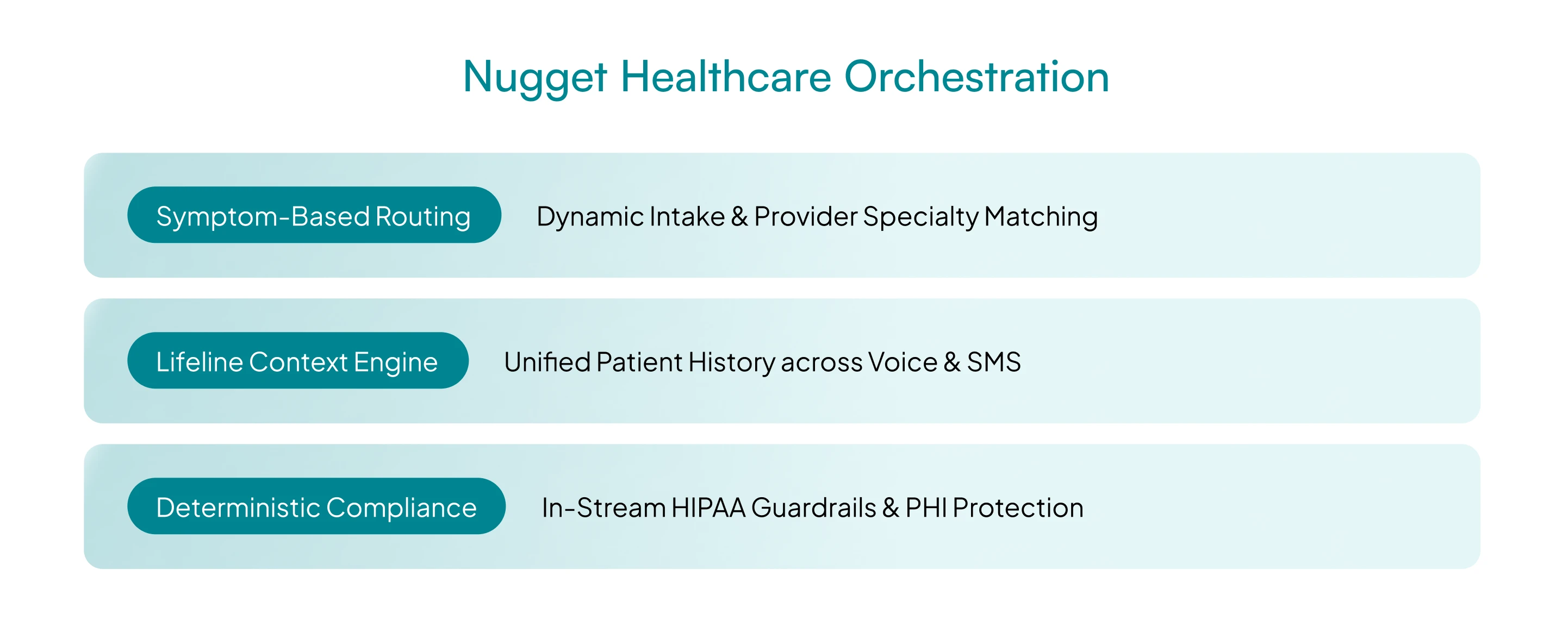
- Dynamic Symptom-Based Triage & Specialty Matching: Nugget parses natural caller descriptions, applying provider preference matrices and health system rules to match patients with the correct medical specialty and slot type.
- Deep Identity Validation & Health Record Verification: Nugget connects into core patient health repositories, validating identity credentials before granting scheduling authority or modifying records.
- Automated Missed-Appointment Recovery Loops: Nugget triggers intelligent recovery workflows when missed appointments occur, contacting patients, logging hardship data, and offering immediate rebooking options to maintain clinical continuity.
Choosing the right AI scheduling assistant delivers measurable improvements in access speed, clinical schedule density, and operational performance:
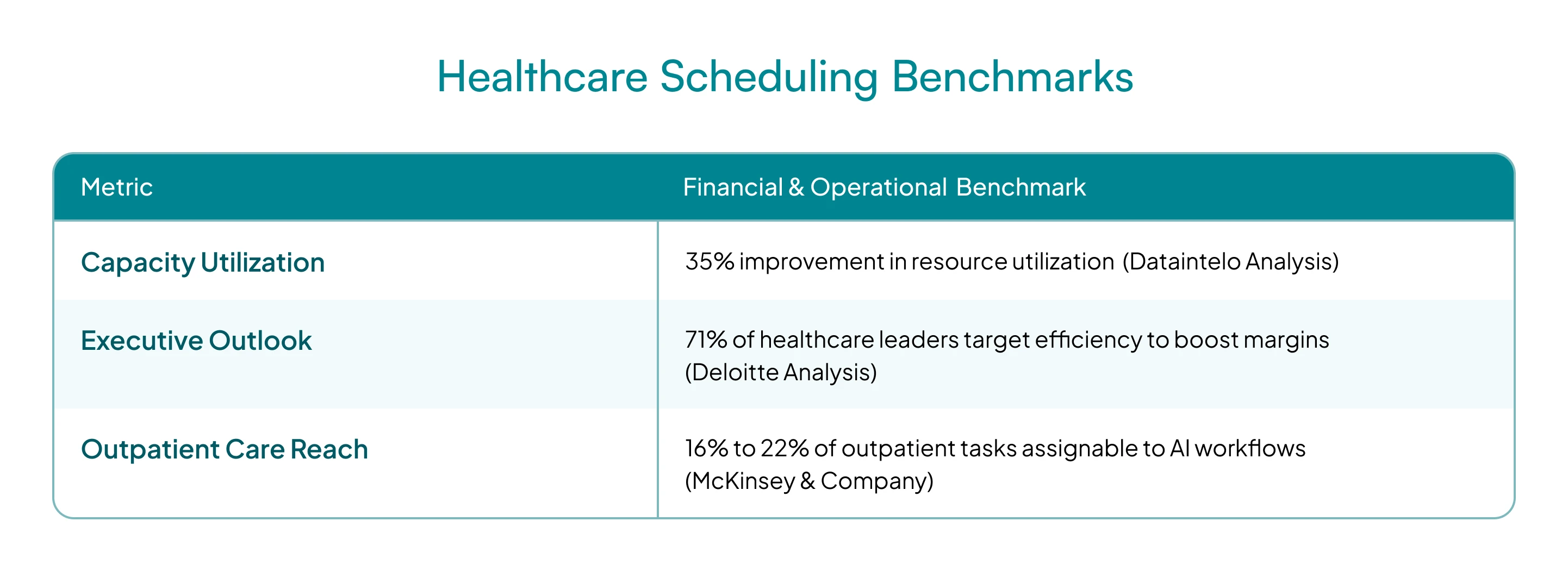
Enterprise data highlights the financial and operational impact of AI tools across healthcare scheduling:
- Resource Utilization Lift: Research published by Dataintelo demonstrates that healthcare facilities deploying AI scheduling engines achieve up to a 35% improvement in resource utilization, expanding patient throughput without expanding administrative headcount.
- Strategic Executive Focus: Industry surveys from Deloitte show that more than 70% of health care C-suite executives prioritize improving operational efficiencies and productivity gains, with about 70% saying investment in digital technology platforms is important.
- Administrative Automation Potential: Analysis by McKinsey & Company indicates that AI can today perform some 16% to 22% of US outpatient care, covering low-complexity evaluation and management visits and the interpretation of diagnostic or imaging results.
EHR State Locking and Bi-Directional API Integration
Multi-Resource Scheduling Logic and Provider Matrices
Enterprise Consent Synchronization
Voice AI for appointment scheduling and no-show reduction is not about deploying a generic free plan, free forever plan, or team plan widget designed for basic meeting scheduling, scheduling meetings, or sending scheduling links and a booking page. It is about deploying a robust, enterprise-grade orchestration layer that eliminates scheduling friction, protects provider capacity, and supports clinical care continuity.
By handling inbound booking inquiries, executing interactive two-way confirmations, offering immediate rescheduling, and automating no-show recovery loops, enterprise voice AI optimizes healthcare operations and elevates service appointments quality.
When built on a deterministic orchestration platform like Nugget, voice AI converts scheduling from a manual administrative bottleneck into an efficient, patient-centered care access engine.
How does voice AI verify patient identity during a scheduling call?
Can voice AI integrate with legacy EHR platforms without creating double bookings?
How does the system respond if a patient describes acute emergency symptoms during intake?
TL;DR
Missed appointments cause direct revenue loss, idle physician time, and downstream emergency readmissions.
Restricted call hours, long hold queues, and static one-way text reminders are primary drivers of patient no-shows.
Voice AI manages inbound intake, interactive two-way confirmations, immediate rescheduling, and automated waitlist backfilling.
Voice AI executes administrative scheduling and logistics, while medical diagnosis, triage judgment, and clinical decisions remain with licensed clinicians.
Dataintelo research shows AI-powered scheduling engines boost resource utilization by up to 35%, while McKinsey finds AI can today perform some 16% to 22% of US outpatient care.